Kamei Yoichiro Exhibition
Tuesday, September 1, 2009 - Sunday, September 13, 2009
11:00am-7:00pm
Closed: Wednesday, September 2 and Wednesday, September 9
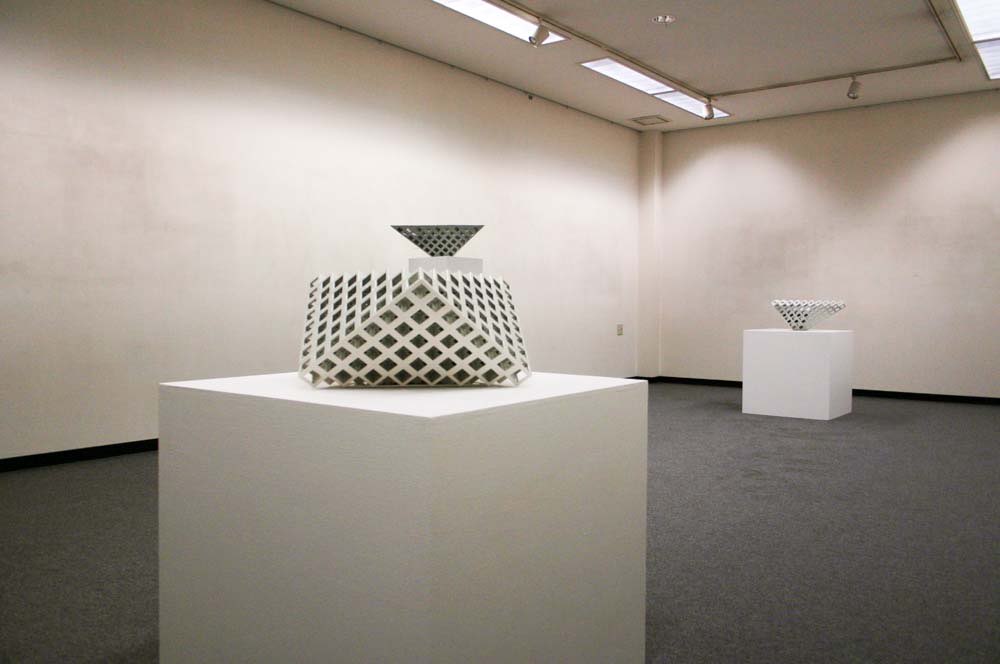
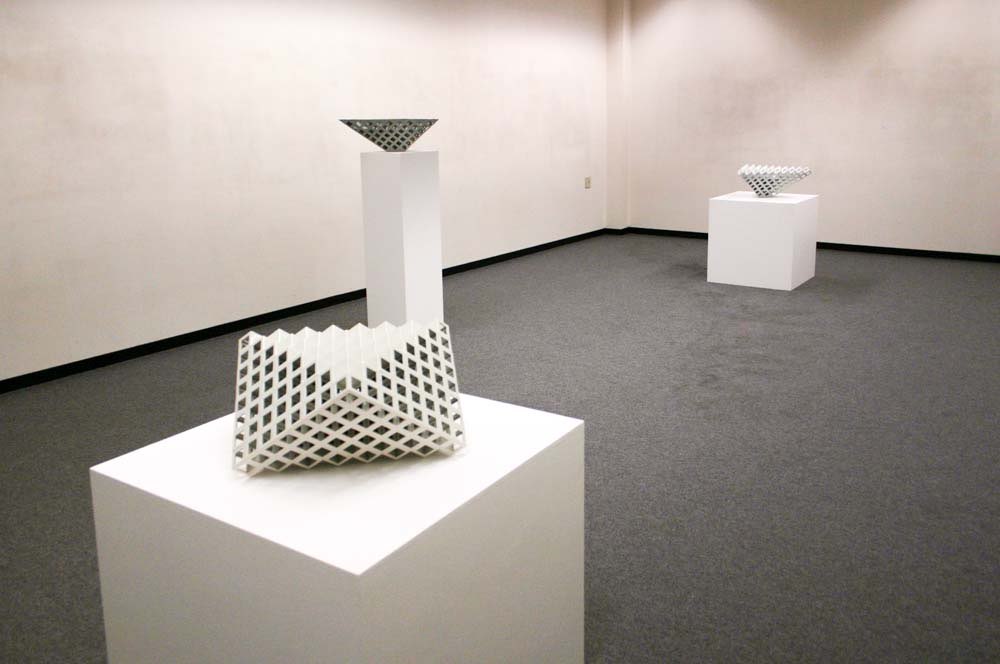
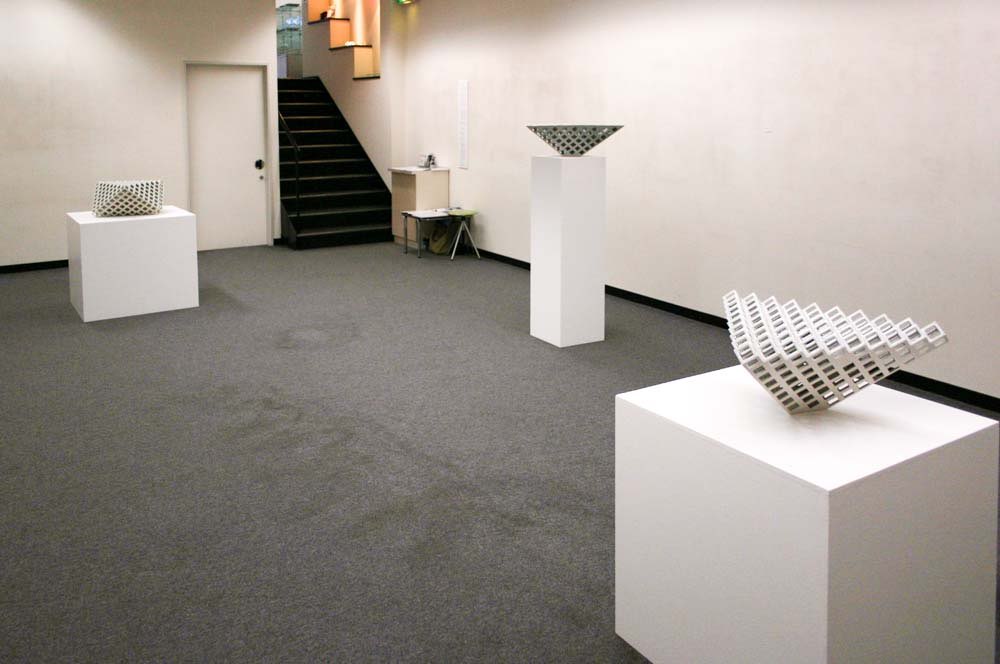
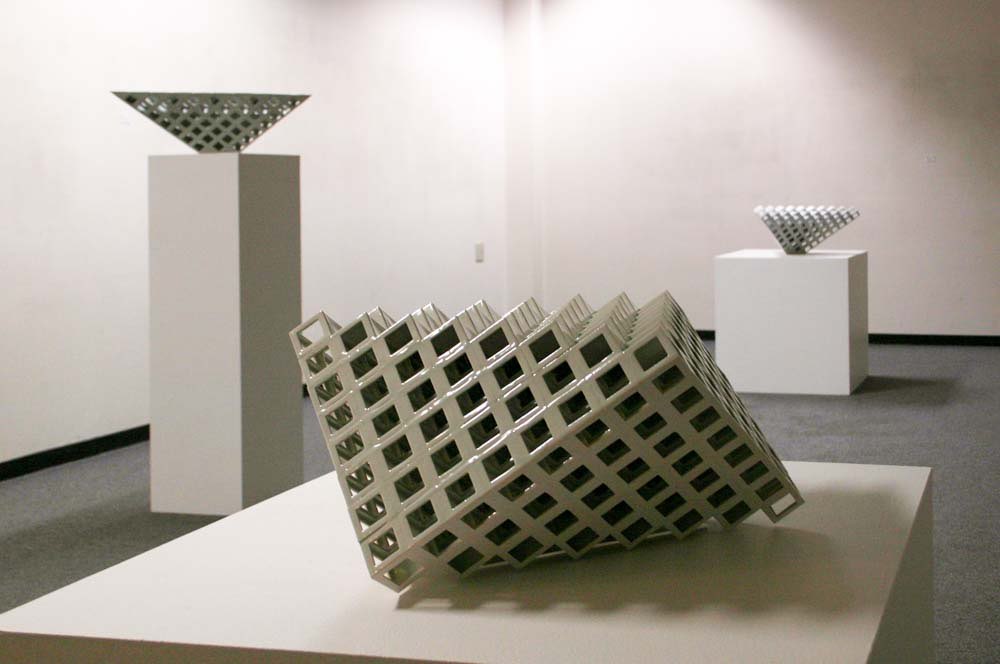
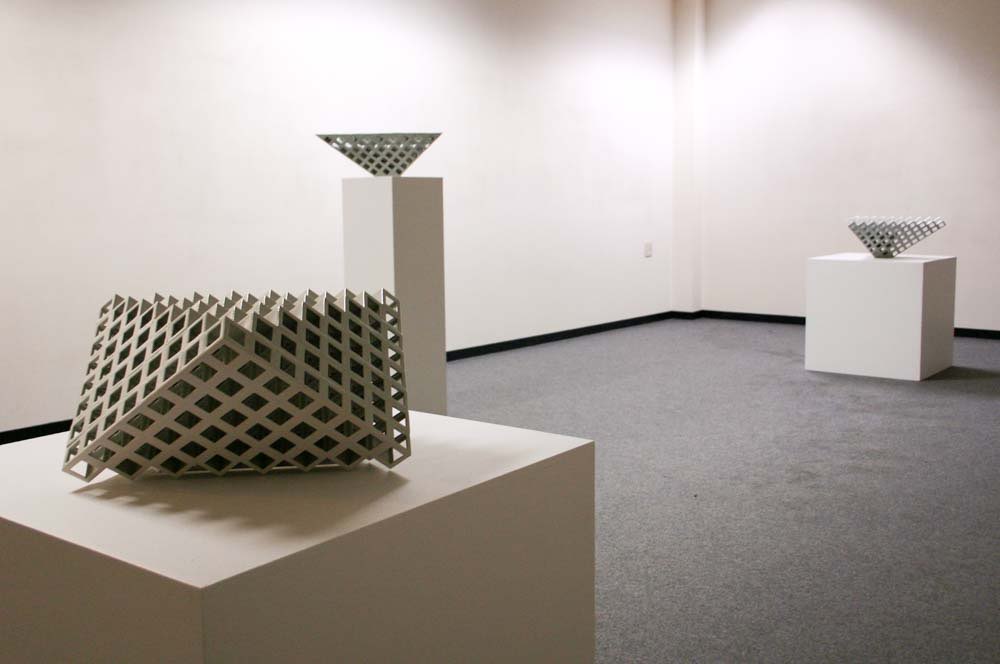
Exhibits: Lattice Receptacle series, small works ... about
Press Release
Aartland Gallery is pleased to present an exhibition of ceramic works by Kamei Yoichiro. Mr. Kamei was born in Kagawa Prefecture in 1974 and is currently based in Osaka.
I first learned of Mr. Kamei's work through a newspaper article reporting that he had won the Grand Prix at the 39th Asahi Ceramic Art Exhibition held in 2001. It is difficult to determine from its appearance whether that award-winning work is an "object" or a "thing for use. The title of the work, "Lattice receptacle," suggests that it is a "vessel. However, I could not solve the question as to why this "white structure" made of porcelain clay was a "vessel.
The following year, I ordered the catalog of the Asahi Ceramic Art Exhibition, which I had been curious about, and once again saw clear photographs of his works. The accompanying description of the artist's intent, "vessel-like figurative expression with a lattice structure," indicated that this blue-and-white porcelain ware was indeed a "vessel" in the artist's conception. However, it is not a "vessel" in the general sense, nor does it seem to express the size of a vessel in an abstract sense, such as a capacity. Let me quote from his published paper to see what Kamei-san's definition of "Utsuwa" really is.
What is important in my definition of "Utsuwa" is what kind of "use" is offered to the "inner space" or "hollowness" created by dividing "inside" and "outside" by some kind of boundary. If we view "Utsuwa" as an existence that "receives" some energy from the outside, whether physical or spiritual, and "radiates" it back to the outside through the inner space, it may become a "starting point" for new formative ideas, regardless of its role or form as a vessel, as something that expands the concept of "Utsuwa". It could be the "starting point" for new formative ideas. (Note 1)
The concept of "Utsuwa" that Mr. Kamei derived was fully crystallized in his own coined word "Lattice Receptacle," which is a combination of the words "lattice" and "receptacle.
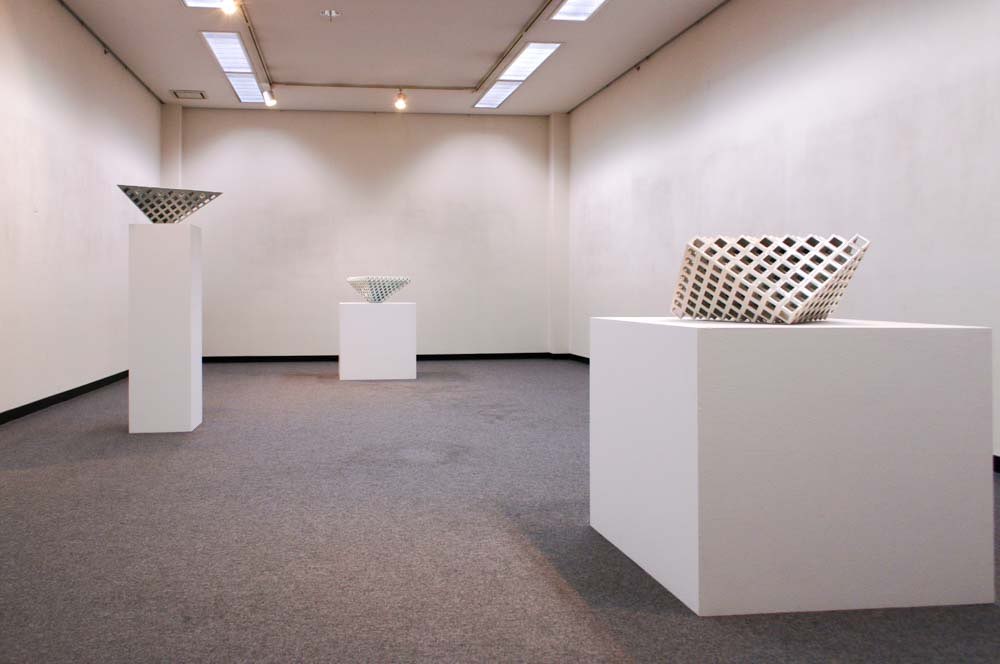
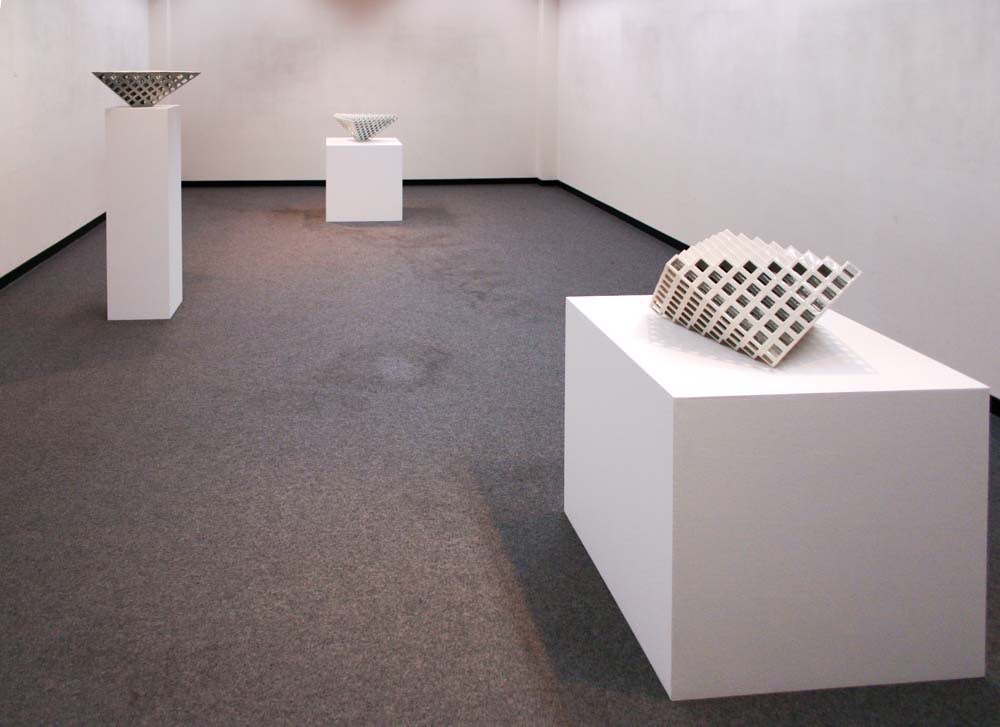
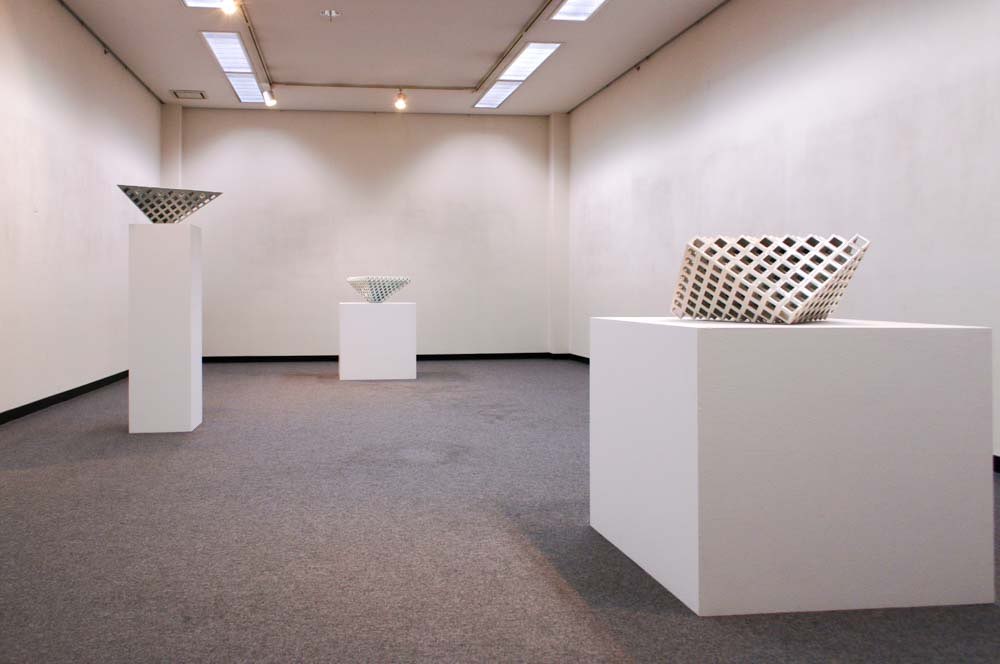
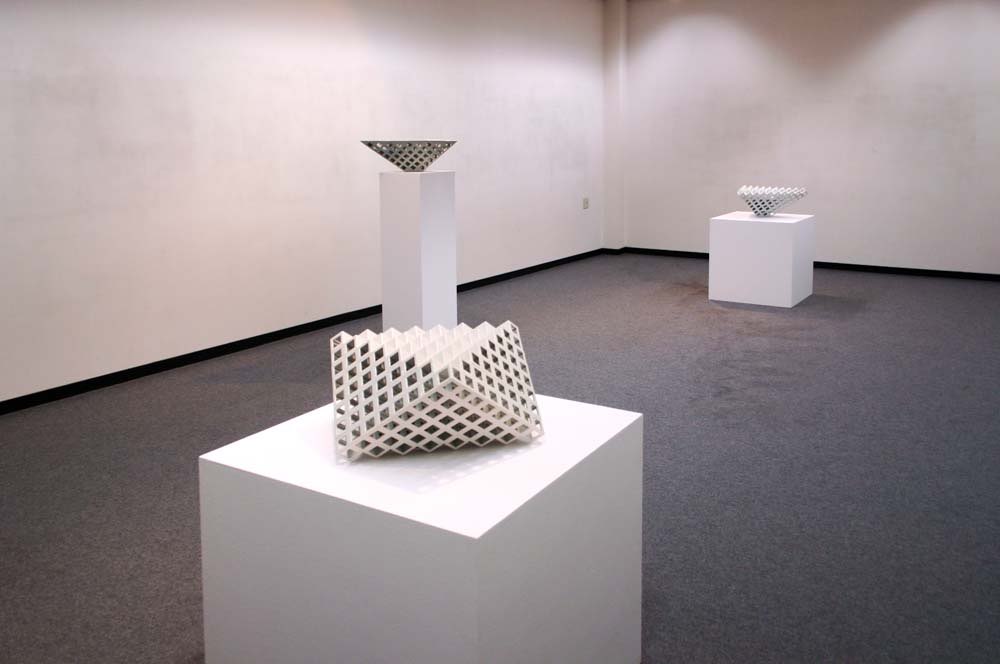
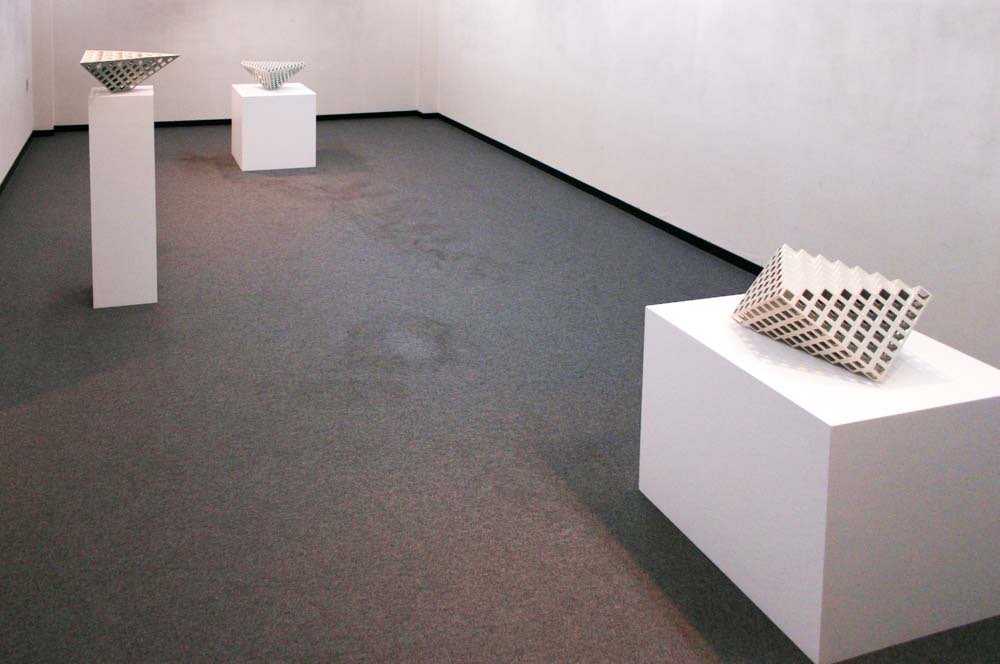
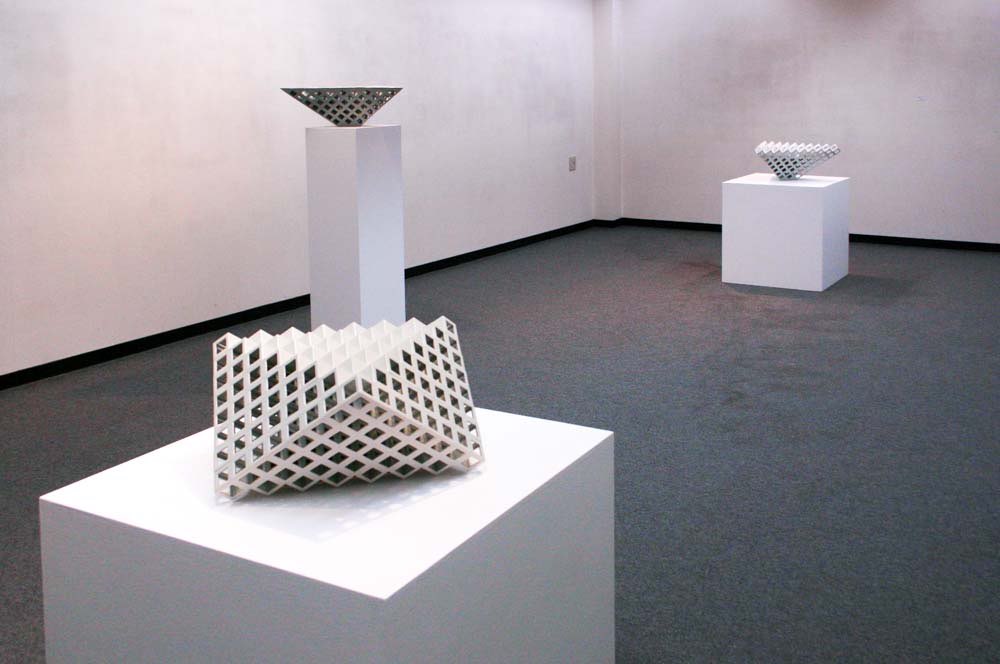
In this exhibition, he will present three large works from the Lattice Receptacle series, including a new work, as well as more than 10 smaller works. We, the organizers as well as the artist, would like to ask for your frank criticism of the works, which are backed by Mr. Kamei's deep insight and outstanding sense of modeling, as he sees that the "figurative haniwa" of the Kofun period are "tamashii no uchiwa" (Note 2) after quietly extracting "tamashii" from hollowed-out eyes and mouth. We, the organizers as well as the artist, would like to ask for your frank criticism of his works. We invite you to view the exhibition.
Notes
(1) Yoichiro Kamei, "Receptor of Light," pp. 18-19, 2005, Kyoto City University of Arts, Examination Thesis, etc. (Doctoral dissertation)
(2) Yoichiro Kamei, "Receptors for Light," pp. 16-17, 2005 Kyoto City University of Arts, Examination Dissertation, etc. (Doctoral dissertation)
(Responsibility: Takashi Yamashita)
Kamei Yoichiro
1974 Born in Kagawa Prefecture /2001 Grand Prix at the Asahi Ceramic Art Exhibition /2006 Completed doctoral program at Kyoto City University of Arts /2010 Received Kyoto City New Artist Award and Kagawa Prefecture Culture and Arts New Artist Award /2014 Exhibited at Jakarta Contemporary Ceramic Biennale (National Museum of Indonesia) /2016 Featured in Crafts Today at Kikuchi Kanjitsu Memorial Museum /2017 Exhibitions at Crosspoint (Kagawa Prefectural Museum) and Narrative Substance (Takamatsu City Museum of Art) /Present: Residing in Okinawa Prefecture
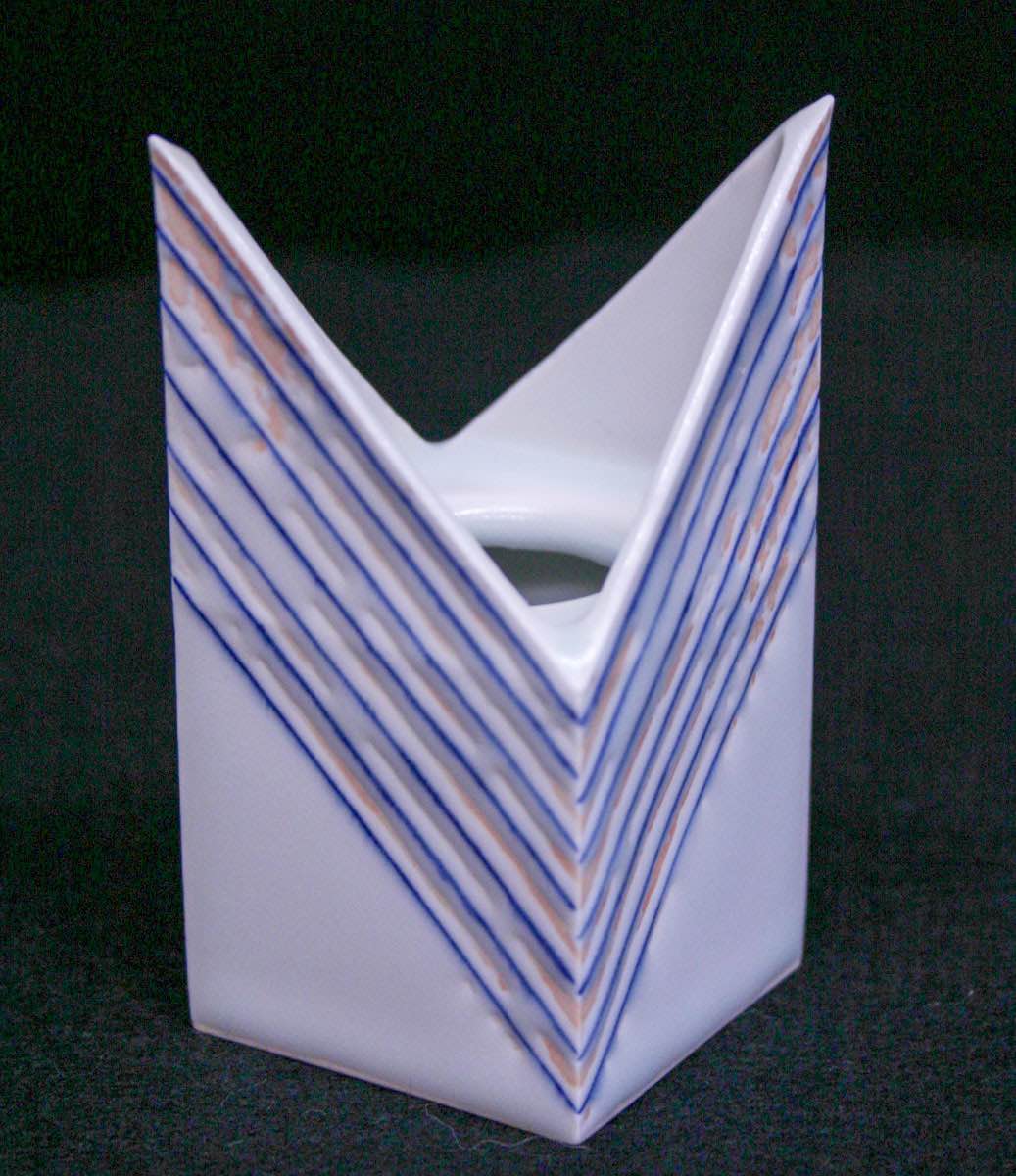
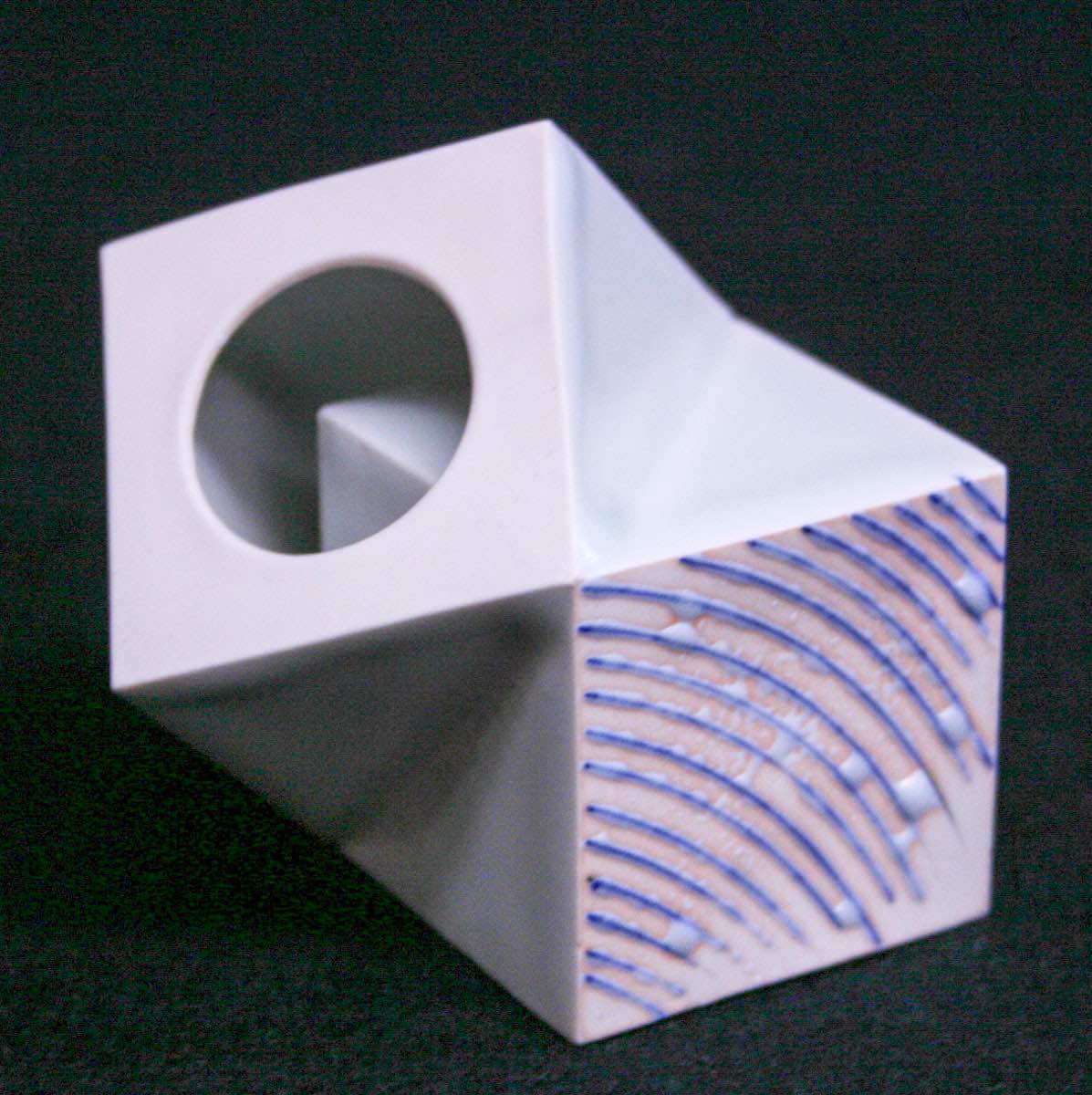
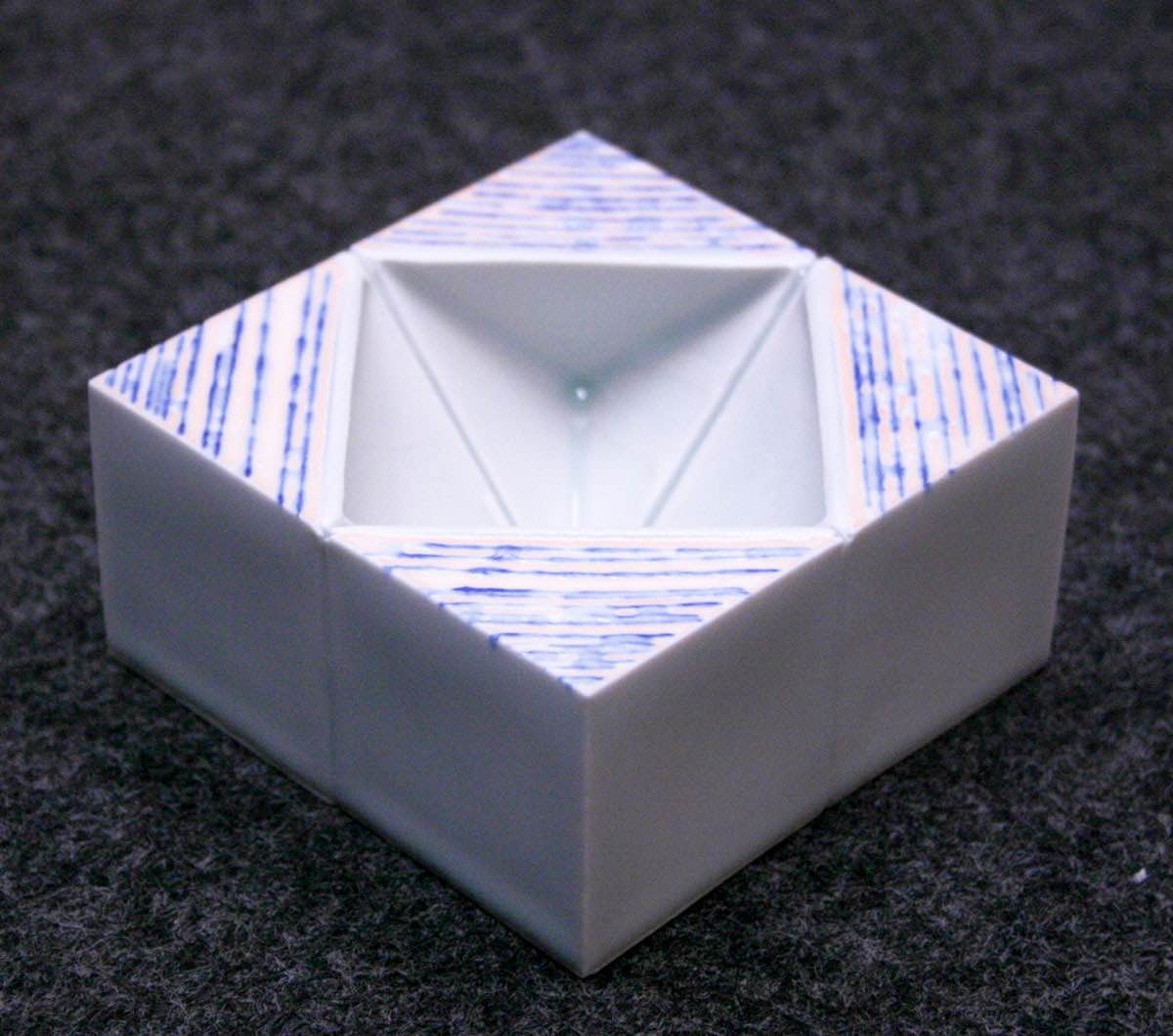
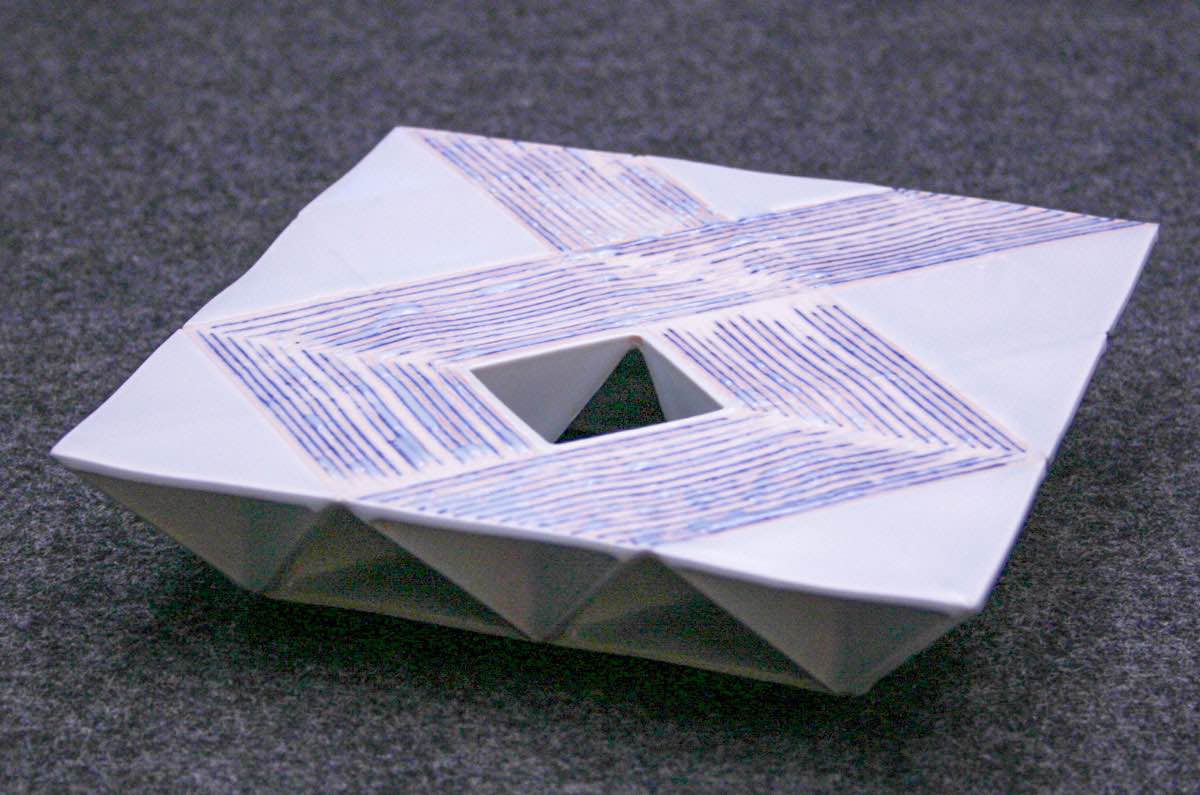
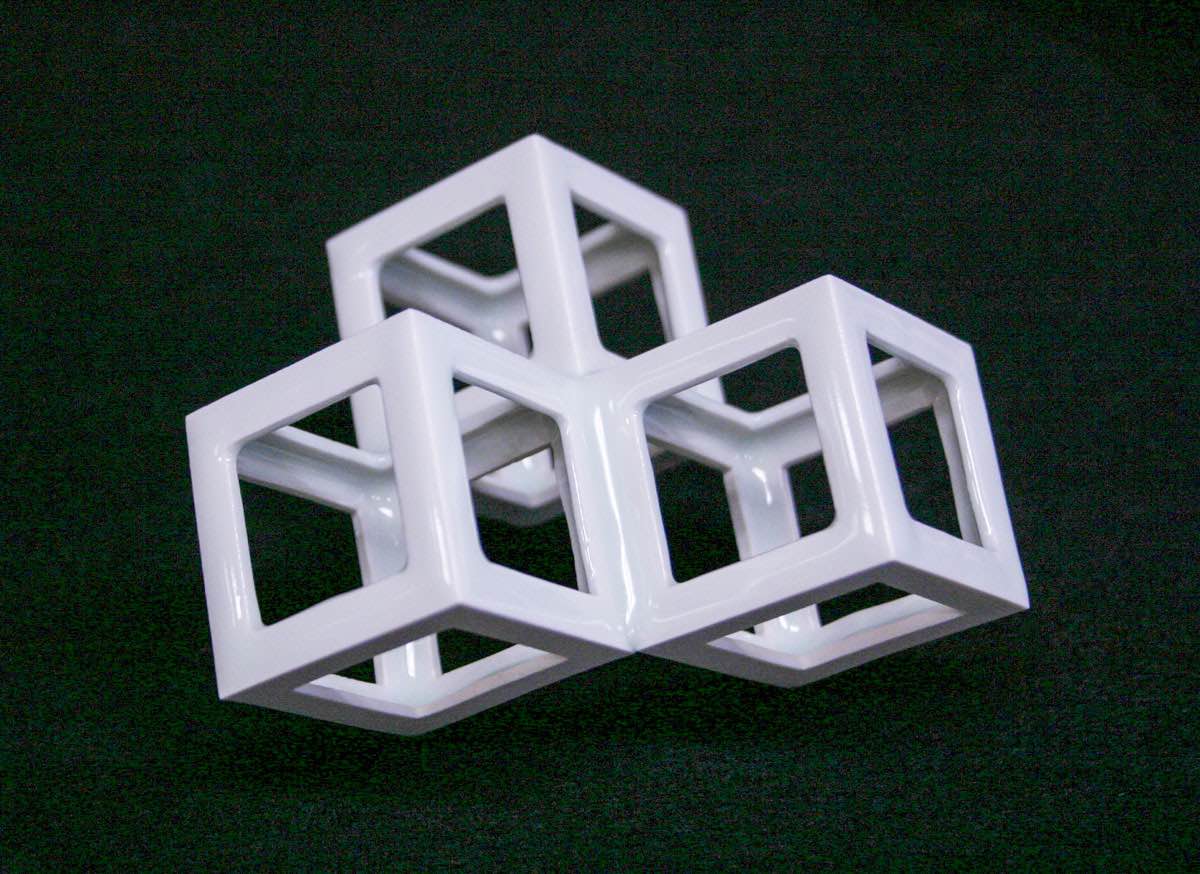
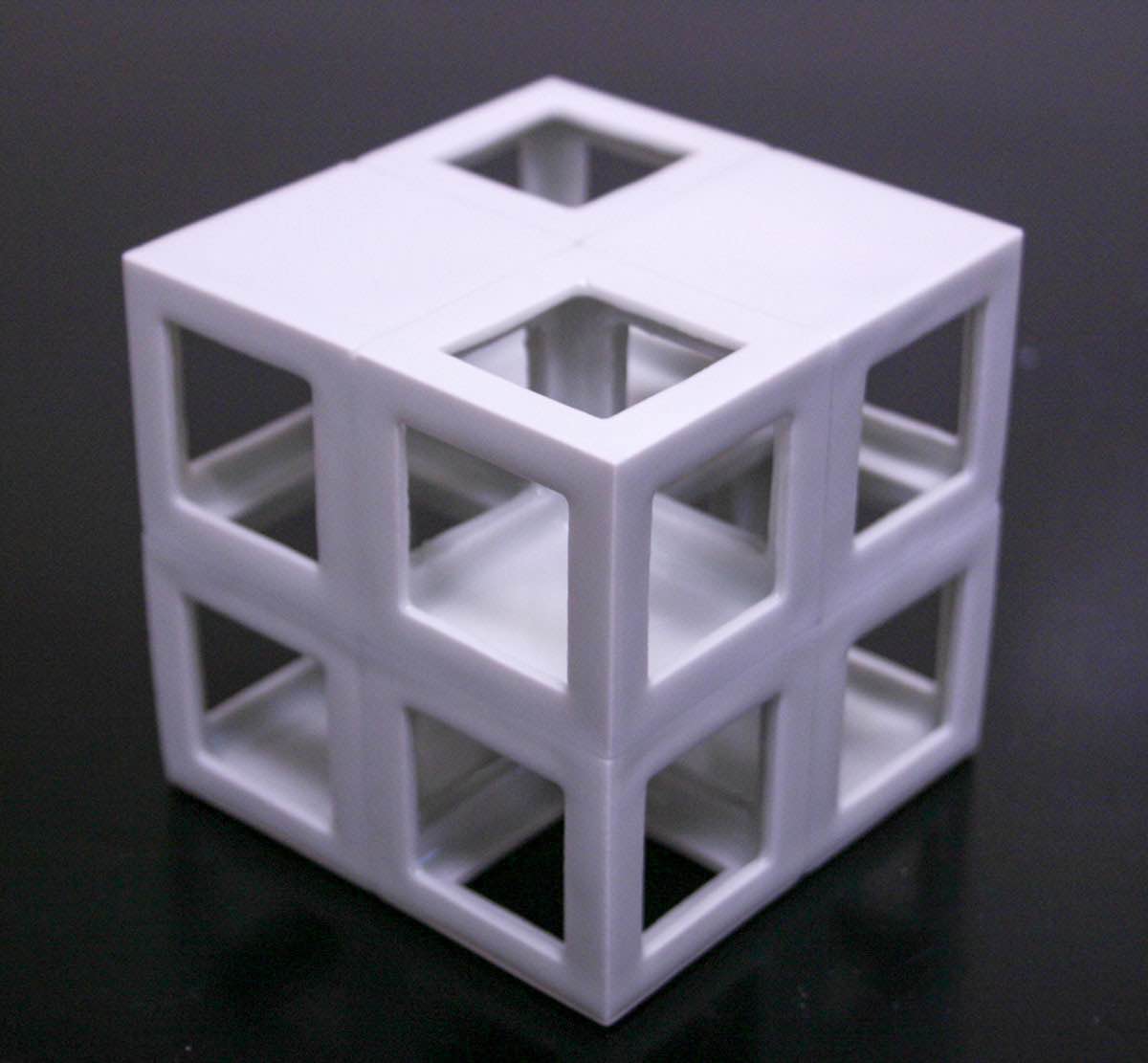
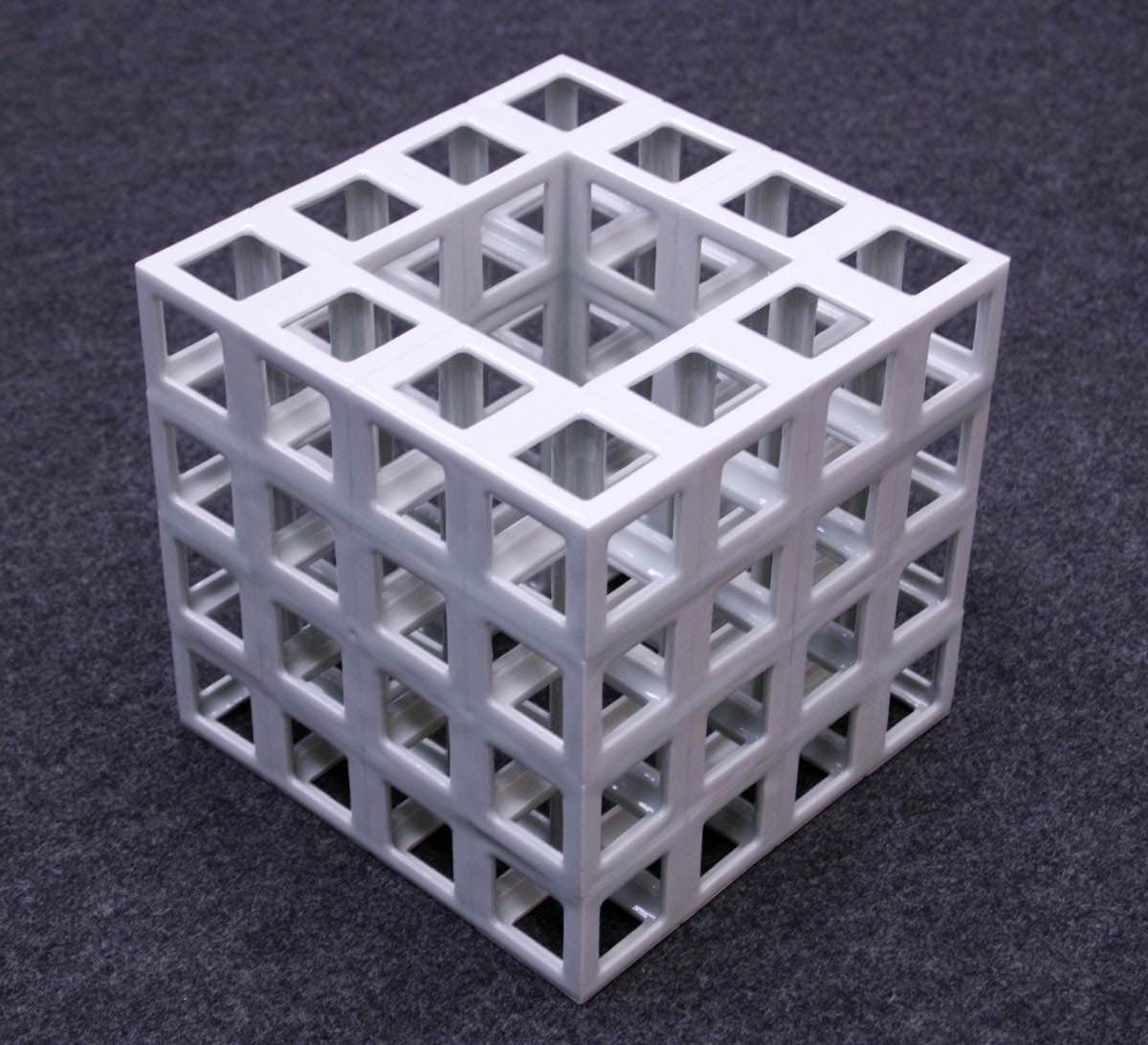
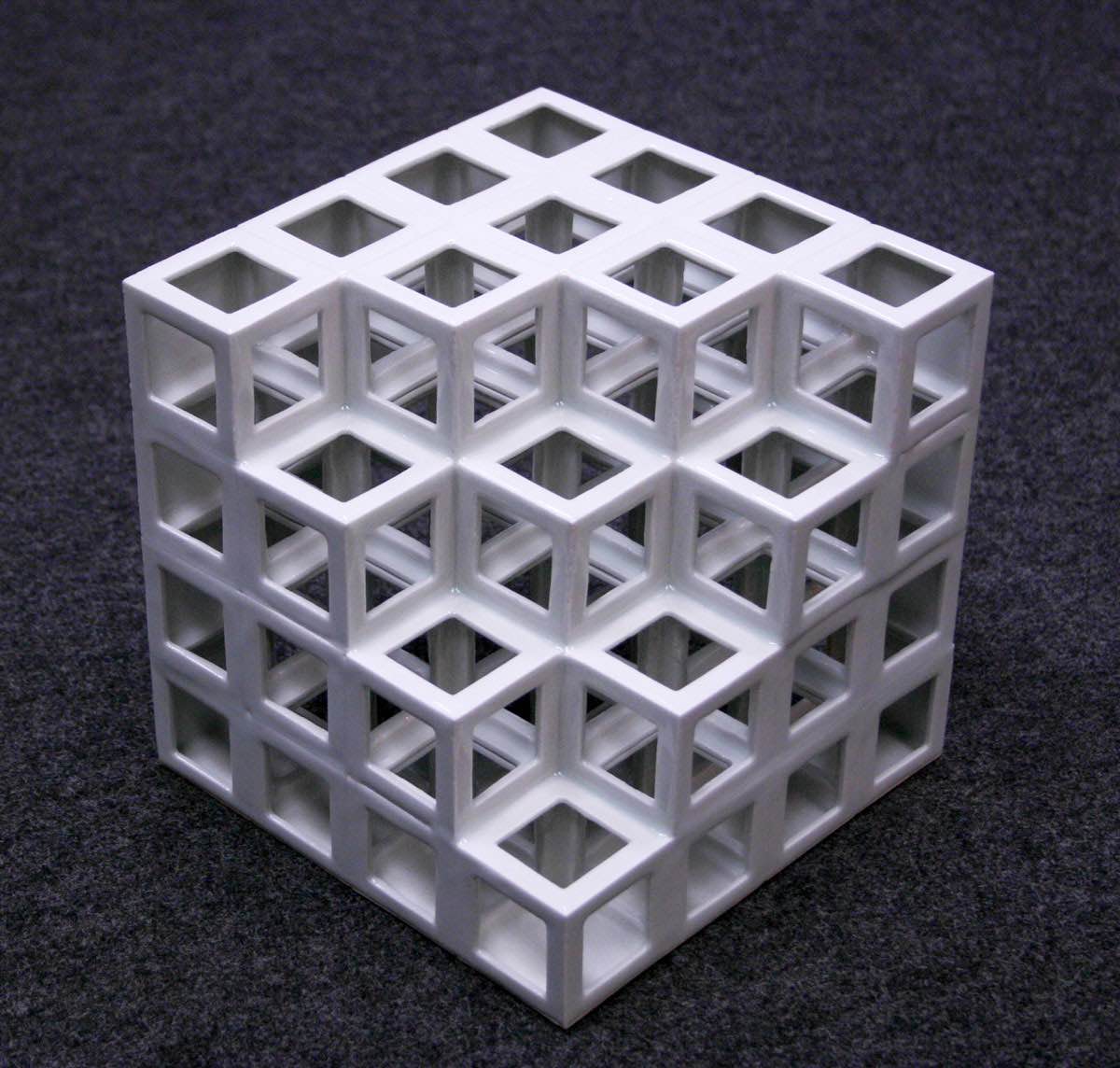
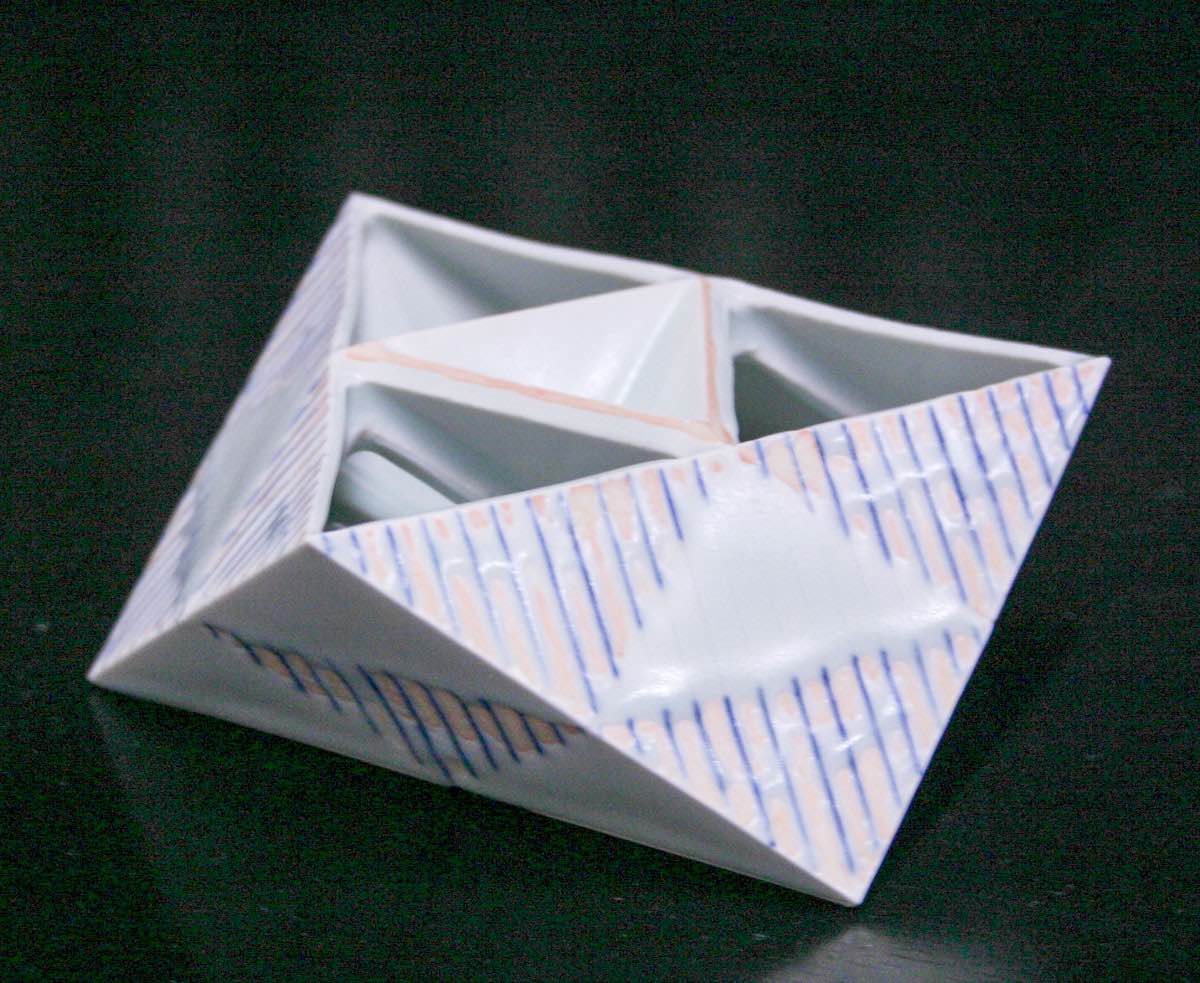
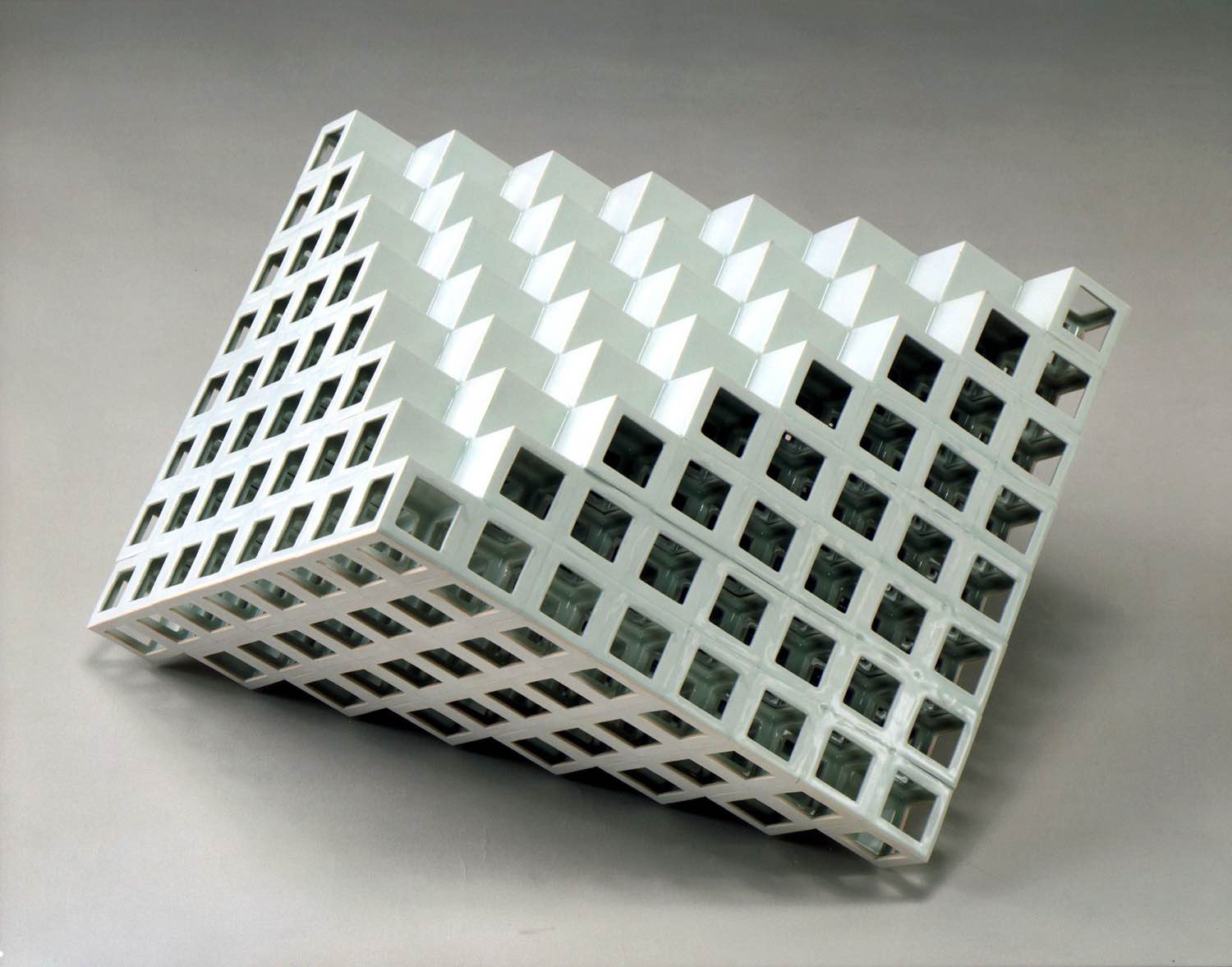
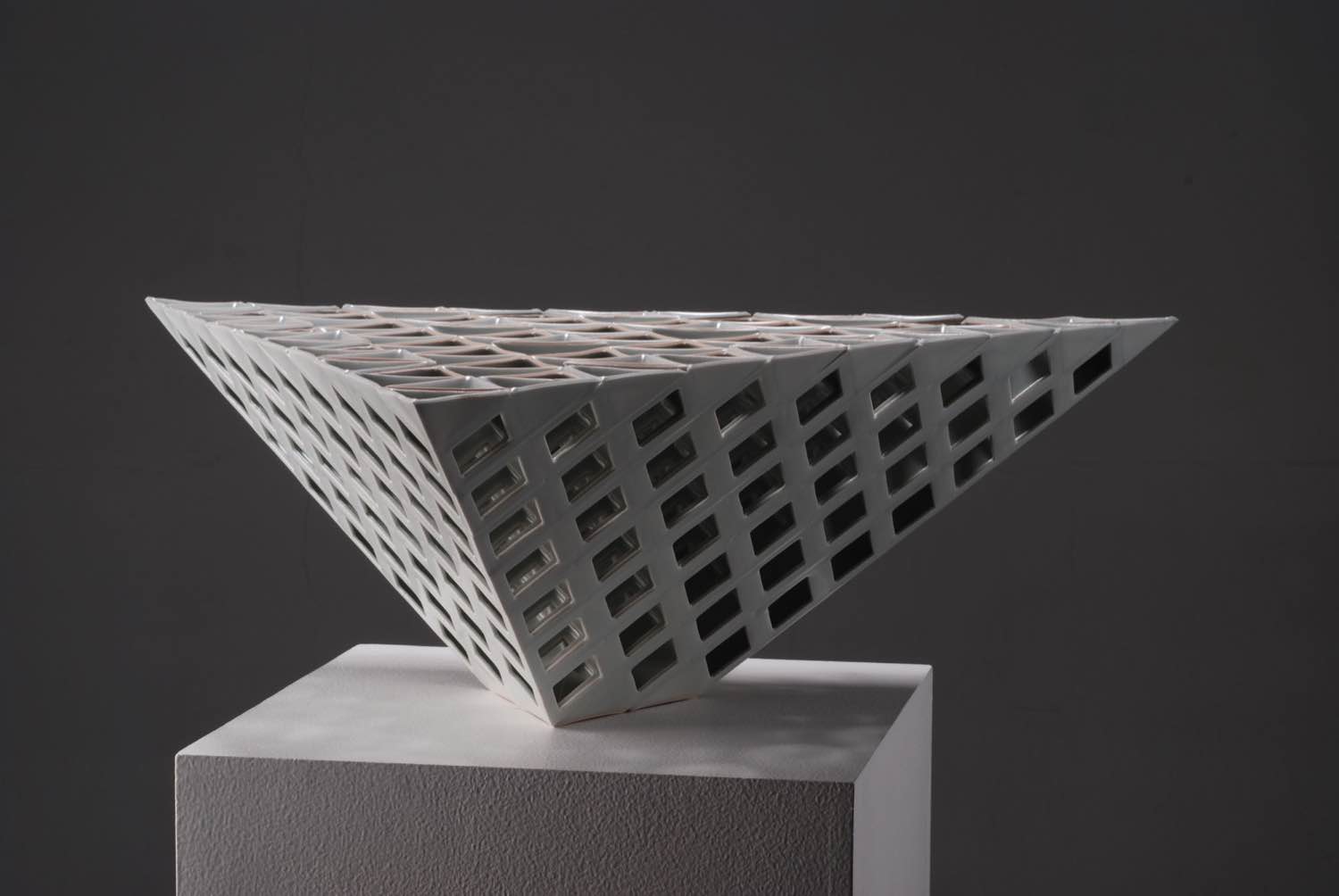

"Screen of Cone" Yoichiro Kamei
For my solo exhibition at Artland Gallery, I will be showing works from the Lattice receptacle series, which I have been working on since 2001.
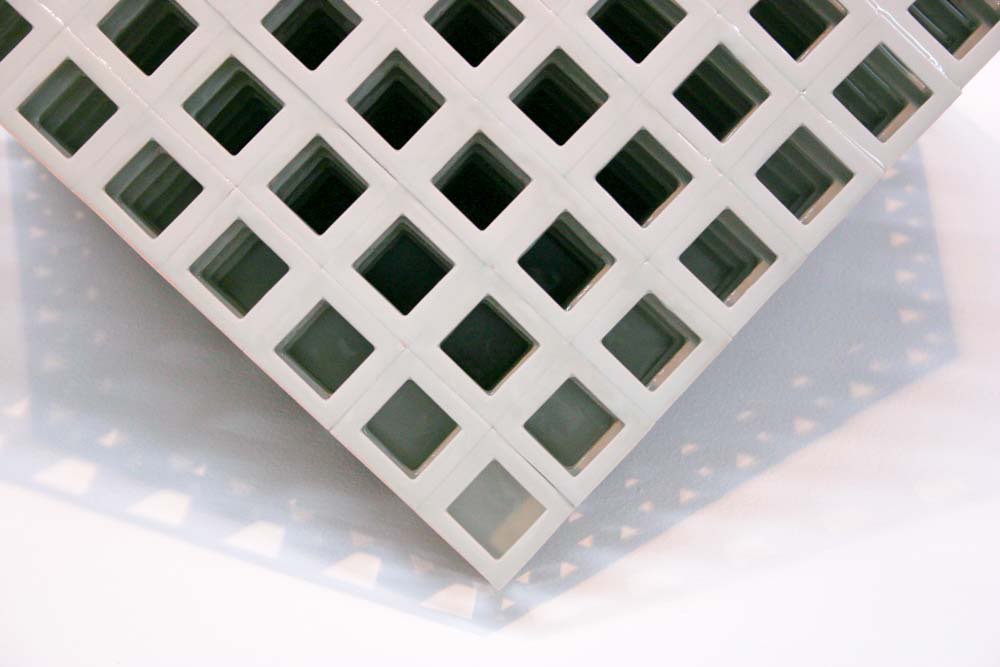
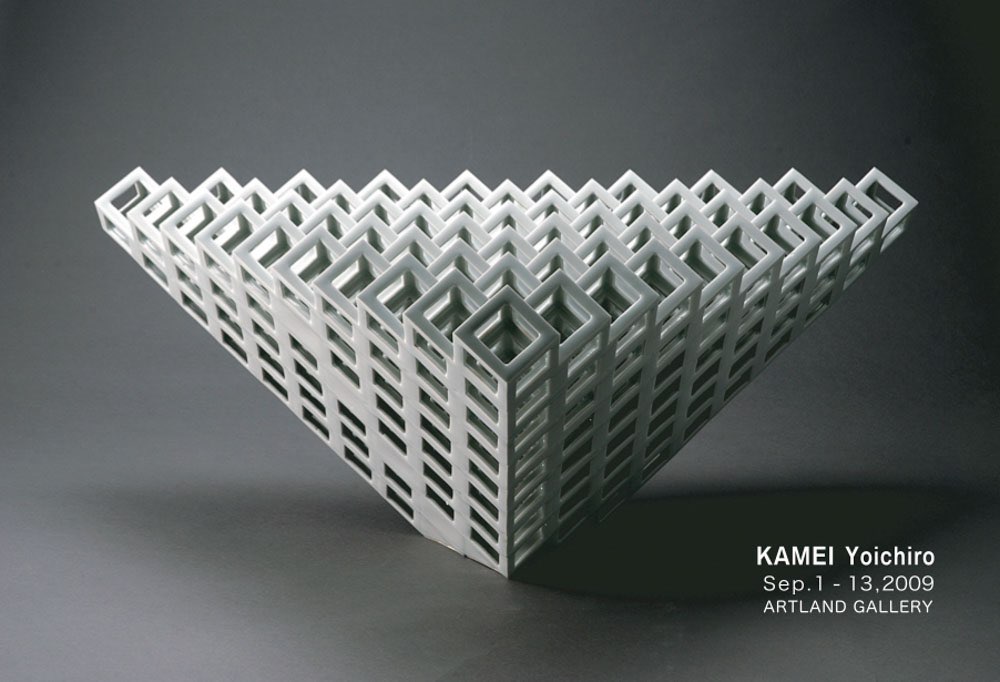
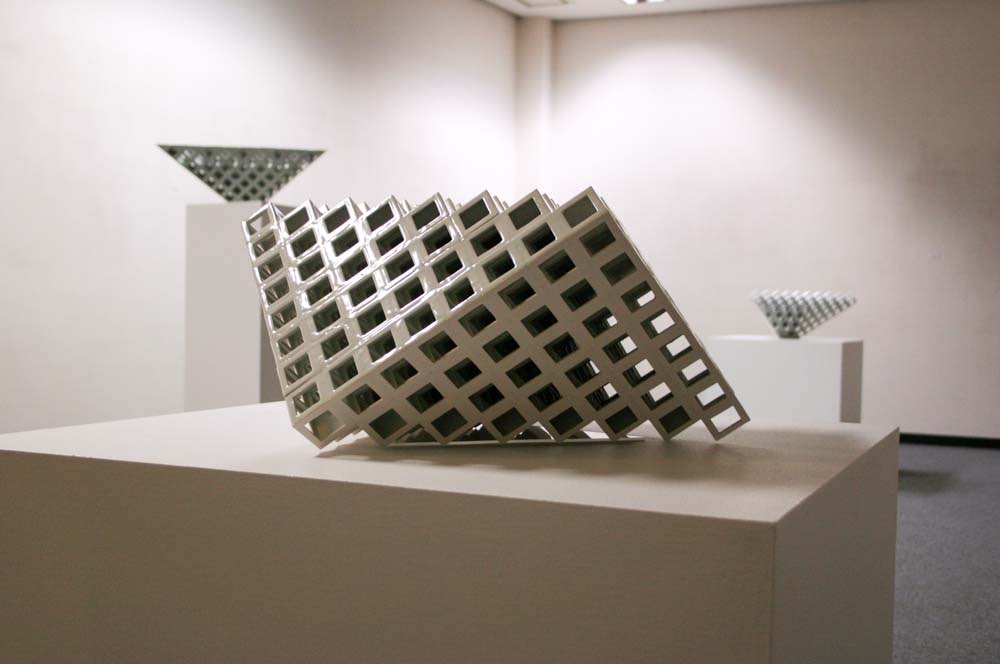
The basic form of this series is a pale blue-and-white porcelain lattice receptacle, which is made up of a series of hollow, identical units (cubes of 5 cm each side), applying the mass-production characteristics of the casting technique.
This system of modeling was developed by overlaying my own theories on the techniques and processes that have supported pottery from the inside and the structural and spatial qualities that exist alongside them in the long tradition of pottery, but in recent years, I have been exploring the possibilities of shading in my works, focusing on the close relationship between the texture of porcelain materials and glazes and the effects of light.
The works to be exhibited in this exhibition were created based on the Lattice receptacle modeling system, and while the cube remains the basic unit, the form has gradually shifted to triangular and pyramidal shapes. This development is not an attempt to change the superficial external form of the work, but is derived from an approach to changes in the internal form that arise from the system of my own work, and from an awareness of the changing expression of light that accompanies these changes.
The "screen" in the title of the exhibition, "Screen of Cone," refers to the appearance of a screen-like surface (a partition-like white curtain) and the gradation of pale shadows inside the work when viewed from a certain perspective. This is due to the visual effect of the internal form of the work and the light, and it can be said that my expression was discovered through the intersection of my own sense of form and the hollow structure of ceramics.