Zhou Hao Exhibition
Aug 22, 2020 — Oct 18, 2020
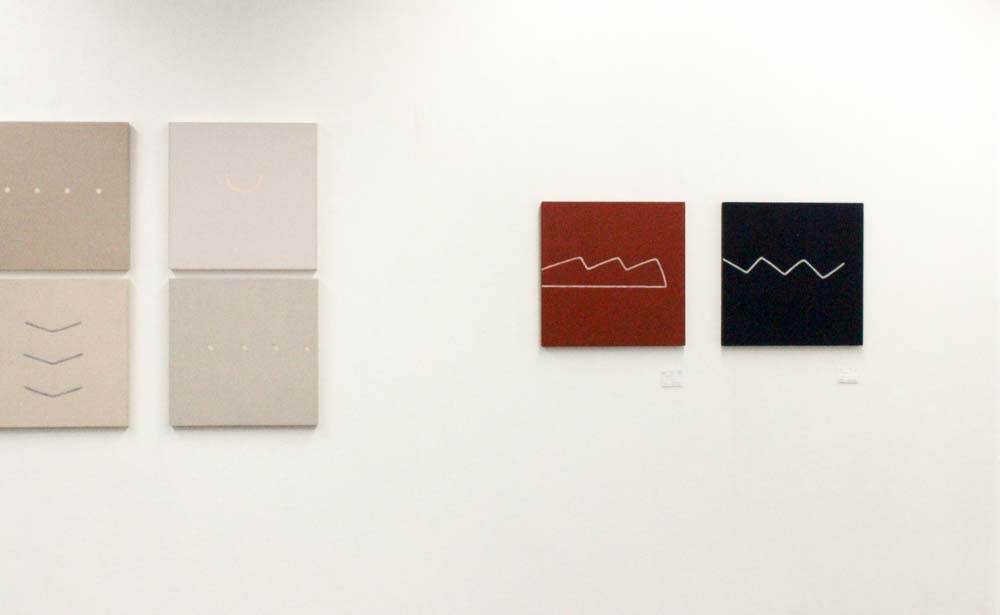
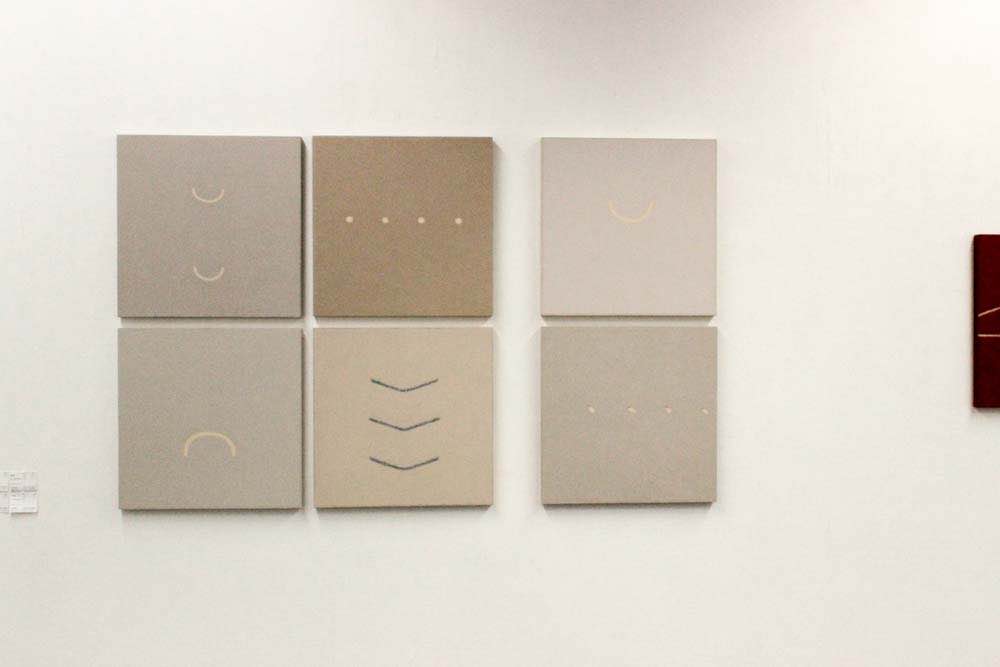
Zhou Hao Exhibition
Aug 22, 2020 — Oct 18, 2020
Aug 22, 2020 — Oct 18, 2020
Material in the Style of a Painting Zhou, Go
COVID-19 from Wuhan, which brought devastation to many countries, is still not under control. As a Chinese citizen, I feel sorry for the world.
At the end of last year, when the reality of COVID-19 was still unknown in China, my solo exhibition was held at a gallery in Beijing's 798 Art District. It was an unprecedentedly large solo exhibition of oil paintings that spaciously lined up in a space of more than 1,000 square meters. The exhibition was originally scheduled to last for two months, but after the Chinese New Year vacation on January 22, the entire 798 Art District was closed and the gallery was virtually closed. The exhibition came to an end as it was.
In such a situation, I returned to Yokohama on January 29, before the border was closed. I cannot deny that the period of self-restraint that I entered into made my work even more intense, and the self-confrontation that this brought about was fortuitous in that it enabled me to reflect on and reaffirm myself in many ways.
In the end, what I seek is a sense of materiality in the style of a painting, or dare I say, "a sculpture that is at once a painting and a sculpture.
Paintings as objects, objects in the name of painting, are what fascinate me today. In other words, it is a shift of interest from the visual to the tactile.Pliage-Collage two years ago was the beginning of this shift.
I am very happy that the first presentation after COVID-19 will be in Marugame. I am also looking forward to seeing everyone in Kagawa
ZHOU Hao
Biography, Selected Exhibitions and Public Collections
Biography
Zhou Hao was born in Shanghai, China, in 1960. From the age of six through his high school years, he spent approximately ten years living through the Cultural Revolution.
In 1983, he came to Japan as a privately funded international student. The following year, he entered the Department of Oil Painting at Musashino Art University. In his third year, he transferred to the newly established printmaking course, becoming a member of its first graduating class and studying lithography. During this period, his work gradually shifted toward abstraction.
At the same time, he encountered the Mingei philosophy of Yanagi Sōetsu, which made a profound impression on him. Through the writings of Suzuki Daisetsu on Zen, he also began to reconsider the classical culture of his native country. While reading works on Daoist thought, particularly Laozi and Zhuangzi, he developed a strong interest in contemporary art in both Japan and the West.
In 1987, he received a scholarship from the Koyama Keizo Foundation for the Promotion of Art and participated in the first Asian Art Student Residency Program, working in residence at the Shirakaba Museum of Art in Yamanashi Prefecture, with the support of Tokyo Gallery Yoshii.
In 1988, he graduated from the Printmaking Course, Department of Oil Painting, College of Art and Design, Musashino Art University. In 1989, he received a Japanese Government Scholarship from the Ministry of Education. In 1990, he completed the master’s program in printmaking at the Graduate School of Art and Design, Musashino Art University.
After completing graduate school, he joined MMG, a printmaking studio in Higashi-Azabu, Tokyo, directed by printmaker Yusaku Masuda. While working in plate preparation and printing, he continued to produce and exhibit his own prints. He left the studio in 2003 and thereafter devoted himself fully to his artistic practice.
In 2008 and again in 2010, through the introduction of Yusaku Masuda, he produced intaglio prints at Atelier Rémy Bucciali in France. In 2016, he participated in the LOVEART – Summer Artists Residence Project and worked in residence in Italy.
Based between Shanghai and Yokohama, Zhou Hao continued his artistic practice and presented solo exhibitions primarily in Japan and China, while also participating in international print exhibitions and art fairs in Japan and abroad.
He passed away in September 2023 at the age of 62.