Imamura Yoshio Exhibition
Mar 03, 2012 — Mar 25, 2012
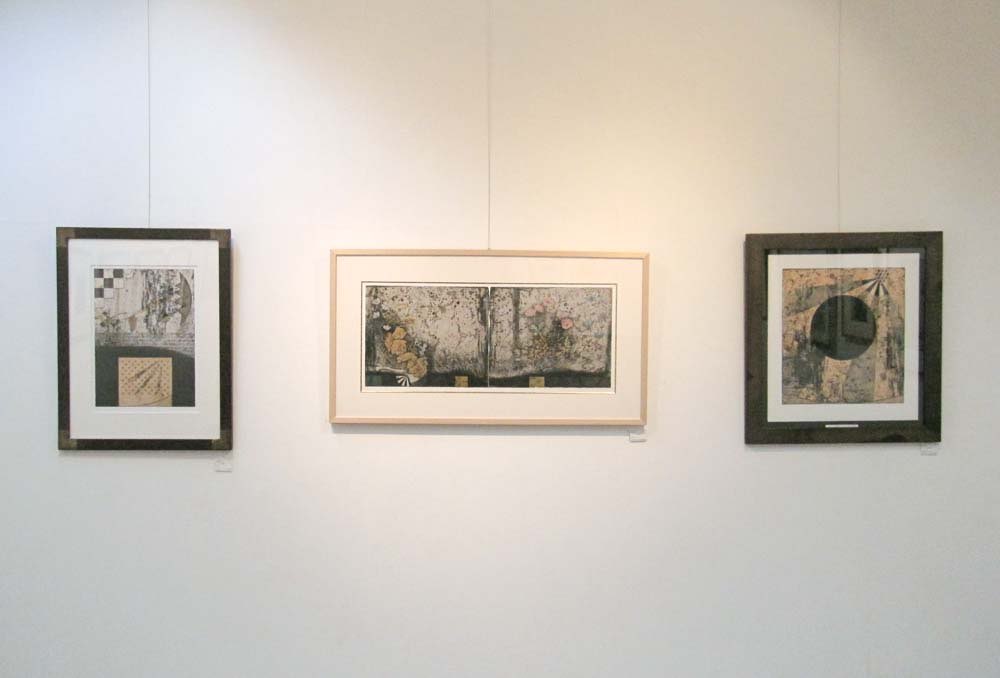
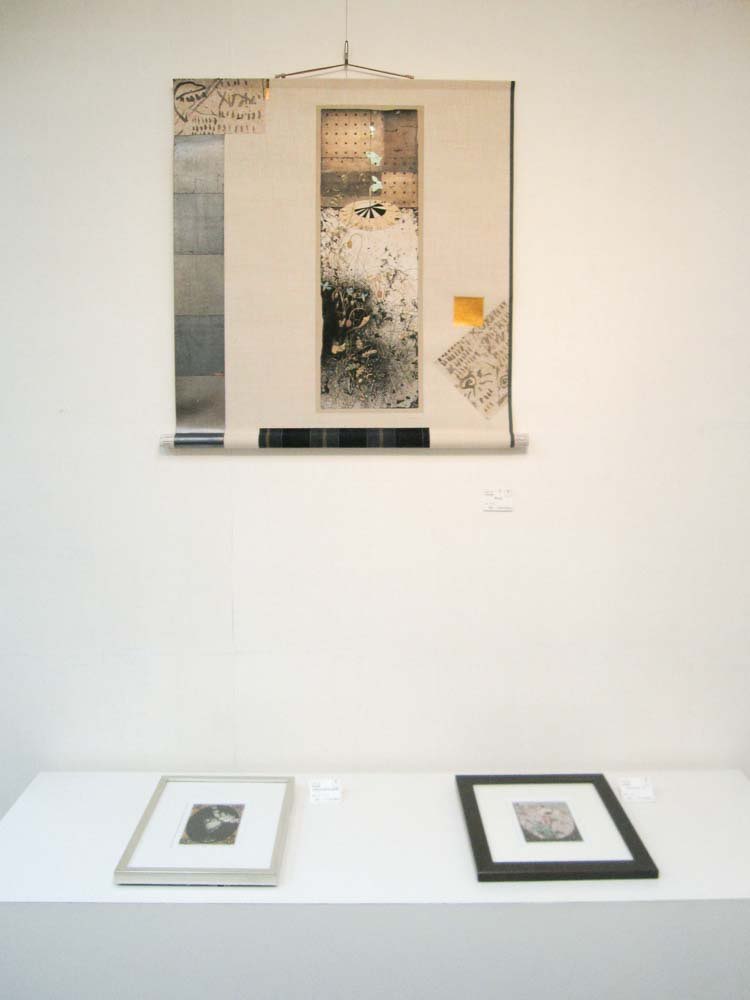
Imamura Yoshio Exhibition
Mar 03, 2012 — Mar 25, 2012
Mar 03, 2012 — Mar 25, 2012
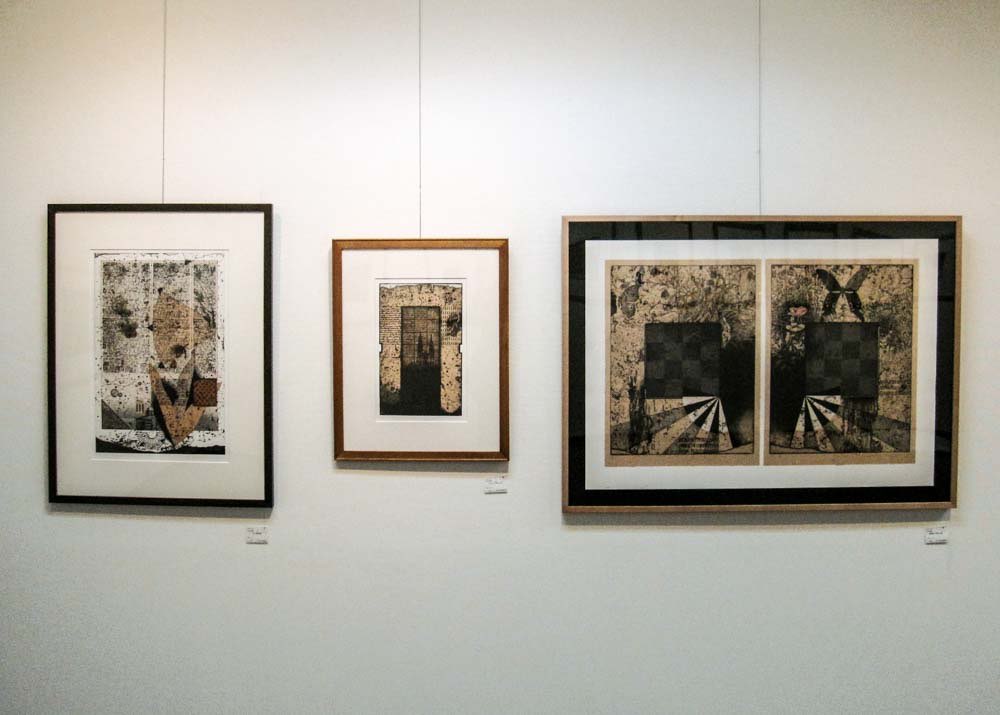
Imamura Yoshio Exhibition
Mar 03, 2012 — Mar 25, 2012
Mar 03, 2012 — Mar 25, 2012
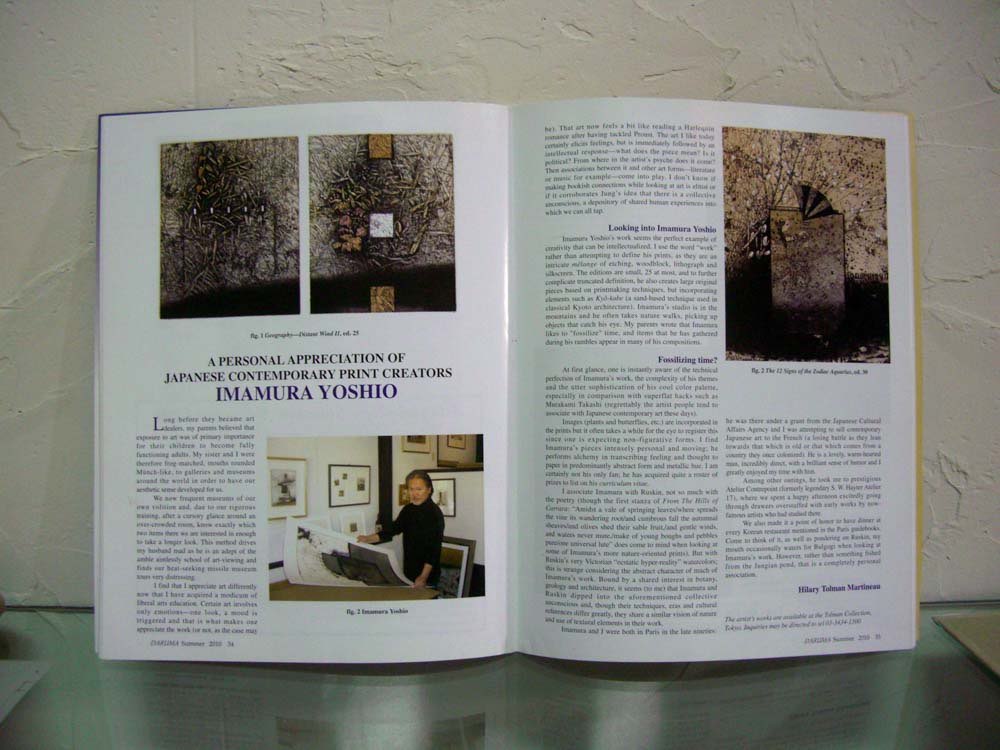
Imamura Yoshio Exhibition
Mar 03, 2012 — Mar 25, 2012
Mar 03, 2012 — Mar 25, 2012
Imamura Yoshio Exhibition
Mar 03, 2012 — Mar 25, 2012
Mar 03, 2012 — Mar 25, 2012
Text Imamura Yoshio
In spring, new life sprouts in the fields and mountains as if competing with each other. In summer, plants and animals celebrate their life, and the harvest season begins. Then, the seasons turn, and the fields and mountains are shrouded in a white veil as the dry wind blows through the trees. The chain of life reminds us that human beings are just animals.
Everything that has life must come to an end, and everything that has form must decay. Even landscapes that seem to remain unchanged are changing dynamically if we shorten the history of the earth like a fast-motion film. In my works, I seal the images as memories of the changing time on copperplate and copy them on paper.
Nature teaches me how trivial the shallow wisdom of human beings can be. The shapes and colors of the lovely flowers, leaves, and trunks that bloom in the fields and mountains have a beauty that no sculptor or painter can describe, and even after they wither, they show their beautiful colors and matiere. I get many hints for my work from walking in the fields and mountains.
When I was a child, I played exclusively in mountains and rivers. The beauty of the starry sky, rain, wind, and clouds seen through the trees. The mysteries of nature filled my childhood with a sense of awe and the fragility of life. These childhood sensitivities settled deep in my mind and appear in my current works.
When I think about my own work again, I realize that the environment in which I was born is the motivation for my artwork
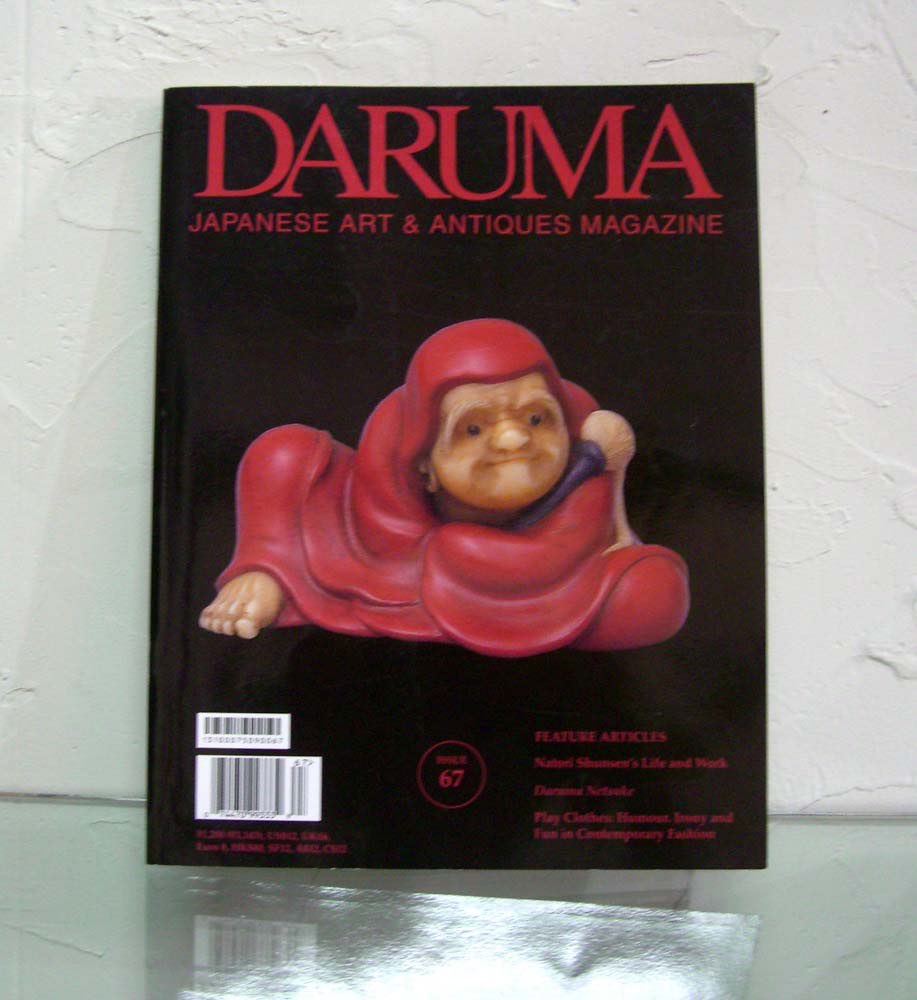
DARUMA magazine Text by Imamura Yoshio
My atelier is a four hour drive from Tokyo. Nestled in the magnificent Japanese Alps, far away from the hustle and bustle of the metropolis, I create work inspired by the changing seasons.
In spring, the wild mountain plants bring forth new shoots, which compete to bud the most exuberantly. In summer, the plants and the animals fully enjoy the bounties of the season, while awaiting the rich harvests of autumn. With the turning of the season, the wind that withers the trees shrouds the wild mountains in a veil of white. Watching these continual shifts in the cycle of life, one is reminded of the fragility of humanity.
All living things must die, all animate objects must decay. Even the grand and impassive mountains, living testimony to the scale of earth’s history, continue to evolve dynamically. In my work, I strive to record the memory of these shifts, the time of these evolutions, onto my copper plates and to impress them on paper.
When man looks nature in the face, he becomes aware of the shallowness and insignificance of his own knowledge. Wildflowers in bloom have driven innumerable artists and sculptors to try to capture their elusive loveliness. The crumbling houses in Japan’s old villages, caught in the ebbing flow of time, provide beautiful colours and textures. When I walk through the wild mountains, they provide me with images for my work.
In my twenties, I made works that were influenced by American contemporary art. But I always had the suspicion that my work was not firmly grounded in my own identity. I suffered a breakdown and lost my passion for creating art. In the midst of this, I saw a magazine feature on modern printmaking, and was particularly impressed by the works of Nakabayashi Tadayoshi, a professor at the Tokyo University of Fine Arts.
I sent him a passionate letter and received a warm and encouraging reply. To this day he remains a respected mentor. In later years, it was through his recommendation that I received a grant from the Cultural Affairs Agency to study in Paris.
Since the Meiji period, Japanese art has generally prized imitations of the West. Art critics in particular, have only seen work in the Western tradition as worthy of review. They have forgotten that the ukiyo-e that flourished in the Edo period had a profound influence on Western art. It is indeed a paradox that contemporary Japanese art is overshadowed by the post-Impressionist tradition, when in fact it was Japanese art that influenced the development of Impressionism.
Even if there is a revival in Japanese art, should this be done by superficially promoting Japanese elements and expressions? To me, it’s not about showing a shallow sense of Japanese-ness, but by allowing a natural understanding of what it is like to be Japanese to develop naturally. This is why my heart is drawn to Momoyama period artists like Rimpa.
During the war, my family evacuated to the mountains where my mother was born. I was born in a humble dwelling, in the midst of poverty. When I was a child, I resented the fact that we were so poor, but now, as one who lives from his art, I realize that I was fortunate.
Living in the valley was like being at the bottom of a bowl. Near our little house there were fields and forests, and a little stream meandered by. The sun only showed its face for a few hours each day, and sank quickly in the evening. In the day, the forests and the stream were my only playground. At night, looking at the sky from the bottom of the bowl was like being in a massive planetarium, which sparked my interest in astronomy. And so, my childhood play times in the desolate mountains have left their mark on my heart, and these images appear in my work.
Thinking about my own work, I have come to realize that the circumstances in which I was born have been a driving factor in my art.
Imamura Yoshio
2013 Invited stay production at Korea International Print Residence (Daejeon)
2017 Invited to Korea South Seoul University Art Center Yoshio Imamura Exhibition
2018 Shenzhen Guanlan Print Museum, China Artist Residence Invited Stay Production
Major international exhibitions, domestic exhibitions / awards
1987 1987 Expected New Artist Award Exhibition / Purchase Award
1988 56th Japan Print Association Exhibition / Award Candidate / Associate Member Recommendation
1989 Winner of the 4th New York International Miniature Print Biennale Exhibition
1st Baratovaban International Print Biennale / Special Award
57th Japan Print Association Exhibition / Associate Member Award
15th Japan-France Contemporary Art Exhibition / Honorable Mention Award / France-Soir Award 2 seats for 90 years /
Received the Figaro Award for 3 seats for 90 years
Purchase of the 9th Frechen International Print Biennale work
Agency for Cultural Affairs Contemporary Art Selection Exhibition (Visit Japan)
1991 17th Japan-France Contemporary Art Exhibition / France-Soir Award 1 seat
Kurakou International Print Triennale (Poland)
1993 20th Lubriana International Print Biennale
1994 1994 Kurakou International Print Triennale (Poland)
1995 Pacific Rim International Print Exhibition / Hawaii Education and
Arts Foundation Purchase Award
Awarded in 1997 and 2000
1996 64th Japan Print Association Exhibition / Associate Member
Award / Member Recommendation
Agency for Cultural Affairs Contemporary Art Selection Exhibition (Visit Japan)
1998 3rd Finland International Mini Print Exhibition / Special Award
2000 20th Cadaques International Small Print Exhibition / Award
2008 New Zealand Pacific Rim International Print Exhibition / Jury
Special Award
2009 Seoul Space International Print Biennale / Purchase Award
Croatia, Split International Graphic Art Biennale Special Award
2011 Seoul Space International Print Biennale Award
2011 CWAJ Contemporary Japanese Print Exhibition 1st Steering
Committee Award
2017 Shenzhen Guanlan International Print Biennale
2018 Croatia International Print Biennale, Split Graphic Grand Prix
2018 Balna International Print Biennale (Bulgaria)
Selected for many other domestic and international print competitions
His work is stored in more than 20 museums around the world, including the United States, Israel and Germany.