- Size : H22 × W59 cm
- Condition: Used (very good) : There are no particularly noticeable defects
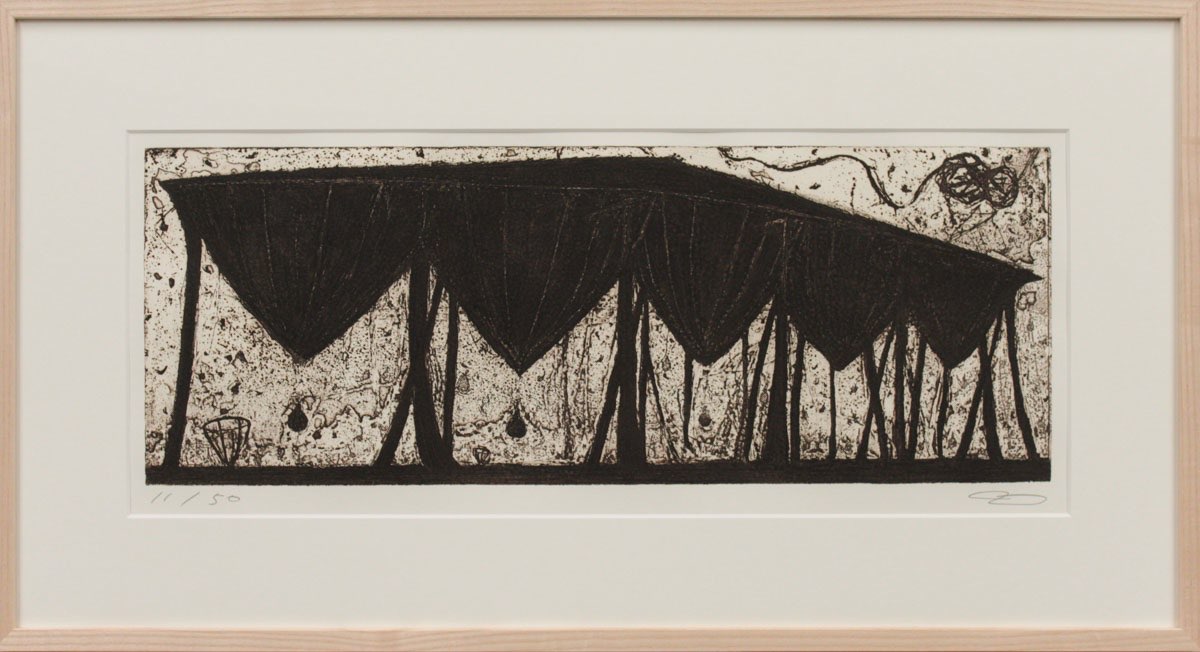
- Framing:Frame is included.
- Framing: Wooden / Framed Size H 43 x W 79.5 cm
- Frame color : Wood
- Item No.:30867
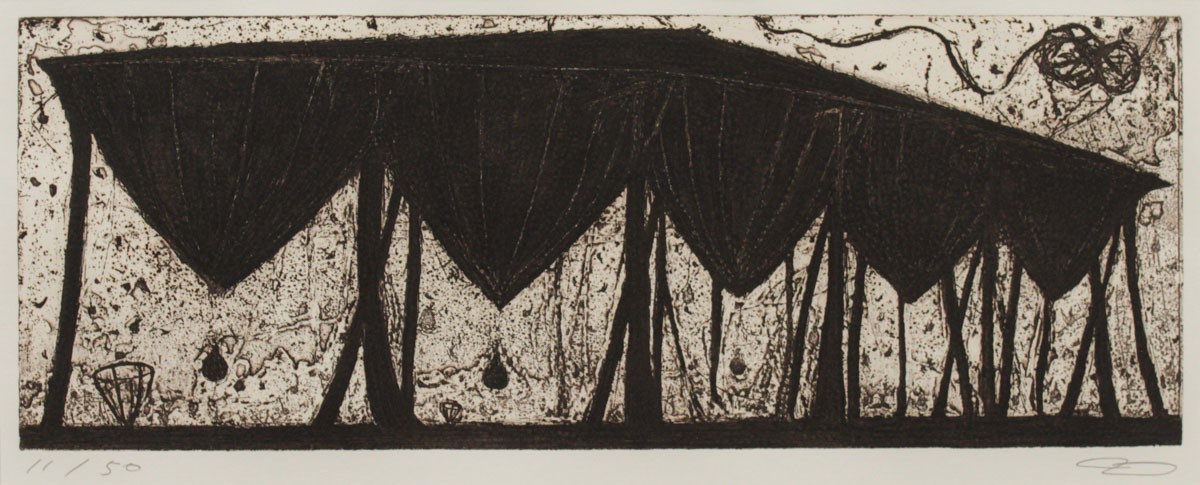
Yamaguchi Keisuke Biography
Born in Hyogo Prefecture in 1962. Graduated from Musashino Art University in 1985. Received the Gunma Prefectural Museum of Modern Art Prize at the Contemporary Japanese Art Exhibition in 1987, and the Grand Prize in 1991. At the Japan International Art Exhibition, he received the Mie Prefectural Art Museum Prize in 1988 and the National Museum of Modern Art, Tokyo Prize in 1990. He has won numerous other awards as well.
Held his first solo exhibition at Hillside Gallery (Tokyo) in 1990. In 1992, he stayed in New York with support from the Asian Cultural Council, and in the same year, he was dispatched to Philadelphia (University of Pennsylvania) as an overseas trainee for artists by the Agency for Cultural Affairs. During this time, he began work on Enola Gay, the largest piece in his series of large-scale composite copperplate prints.
In 1994, he presented the installation Calder Hall Ship Project, which included Enola Gay and sculptural works of ships made from copper.
In 1995, he went to Germany after receiving the Special Prize from the Goethe-Institut Osaka and the City of Düsseldorf at the Osaka Triennale 1994. Using a studio provided by the City of Düsseldorf, he created drawings for three series: Nuclear Power Plant, Elephant Cage, and World Map. He continued his stay in Düsseldorf with support from Atelier Huervig.
After returning to Japan in 1997, he began producing the Colony series of canvas paintings and works related to cassette plants.
From 1998 onward, he expanded his practice through workshops involving cassette plants.
Around 2001, inspired by Goethe’s concept of the Urpflanze and the ideas of Miki Shigeo, he created and exhibited the Flower Heart series, an analogical exploration between plants and humans through painting.
In 2005, he created DU Child, a woodblock print depicting a child exposed to depleted uranium in Iraq—his first work in this medium.
After March 11, 2011, he began keeping a Post-Disaster Notebook.
In 2013, he created Walking Ark on Ogijima for the Setouchi Triennale 2013, and held the Hakobune Project at the Iwaki City Art Museum the same year.