Hara Hiroshi
Jan 07, 2012 — Jan 29, 2012
Hara Hiroshi
Jan 07, 2012 — Jan 29, 2012
Jan 07, 2012 — Jan 29, 2012
Hara Hiroshi
Jan 07, 2012 — Jan 29, 2012
Jan 07, 2012 — Jan 29, 2012
Hara Hiroshi
Jan 07, 2012 — Jan 29, 2012
Jan 07, 2012 — Jan 29, 2012
Hara Hiroshi
Jan 07, 2012 — Jan 29, 2012
Jan 07, 2012 — Jan 29, 2012
Hara Hiroshi
Jan 07, 2012 — Jan 29, 2012
Jan 07, 2012 — Jan 29, 2012
Talk: "Center and Region in Contemporary Art
Date & Time: January 8, 2012 (Sun.) 2:00 p.m. -
Fee: Free of charge
Venue: Artland Gallery
Please feel free to attend the talk with Hara Hiroshi, featuring Matsunaga Yasushi (art coordinator).
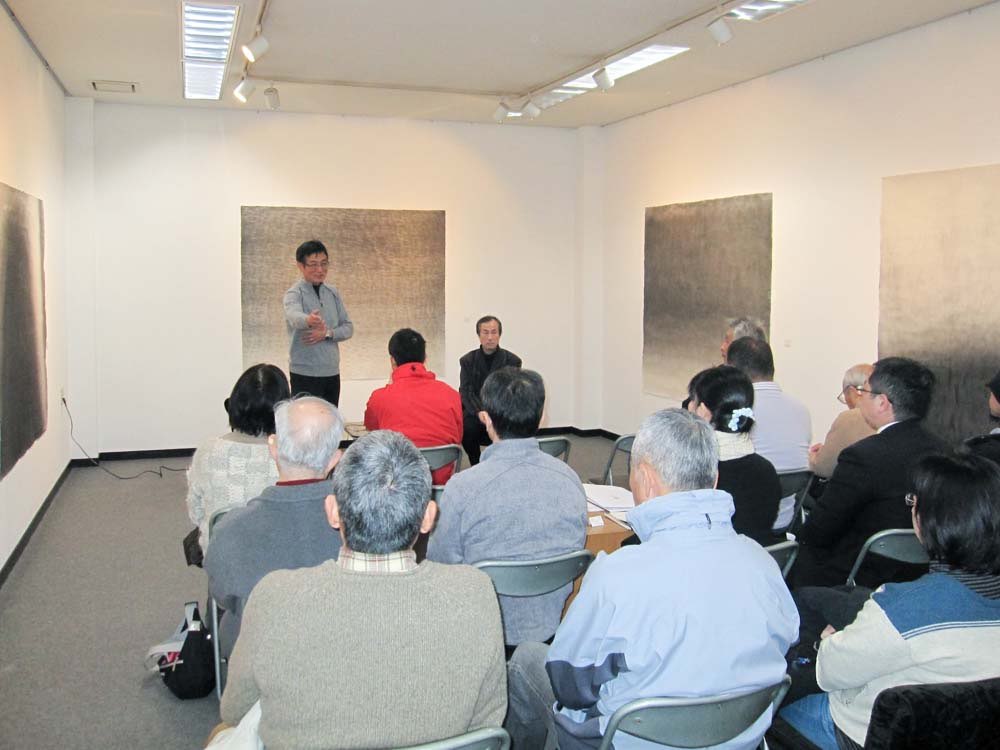
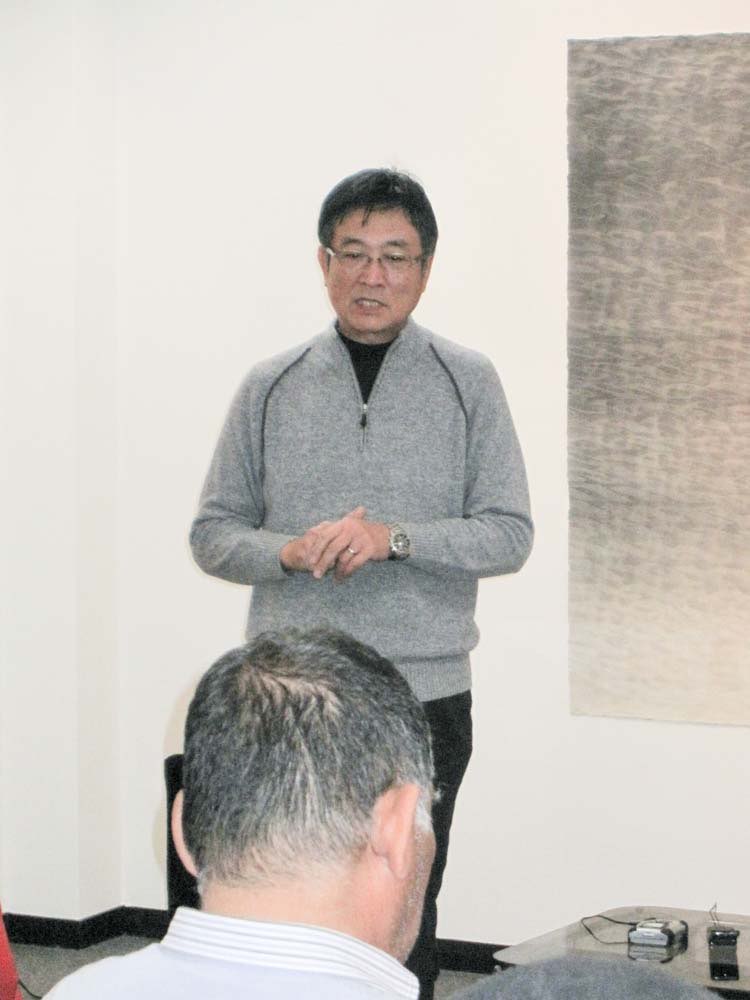
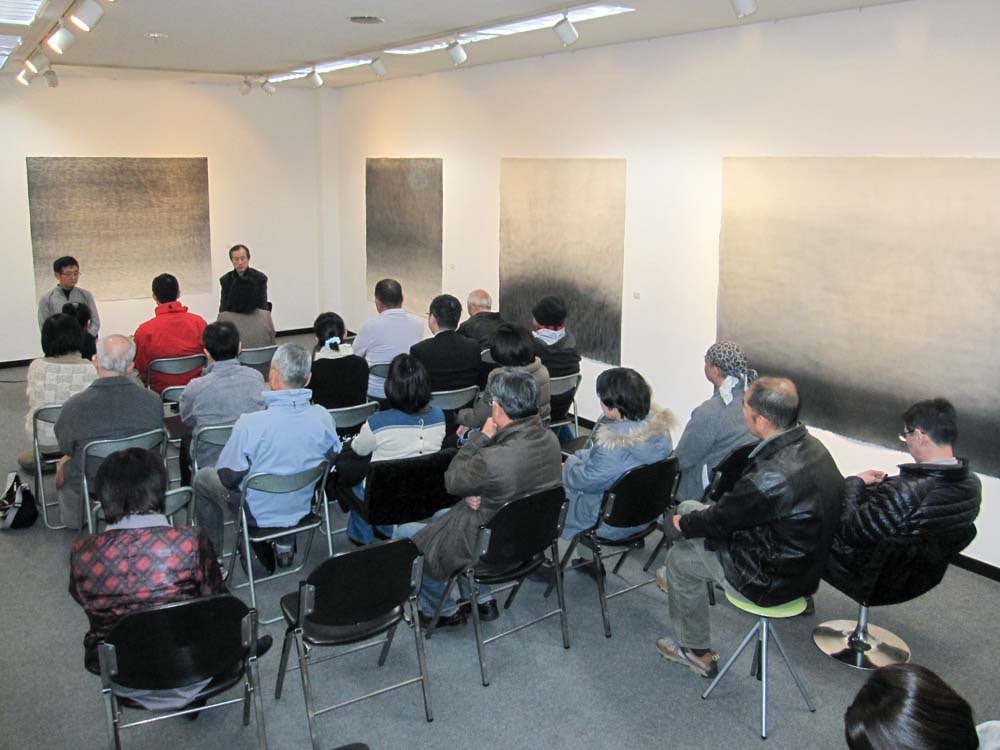
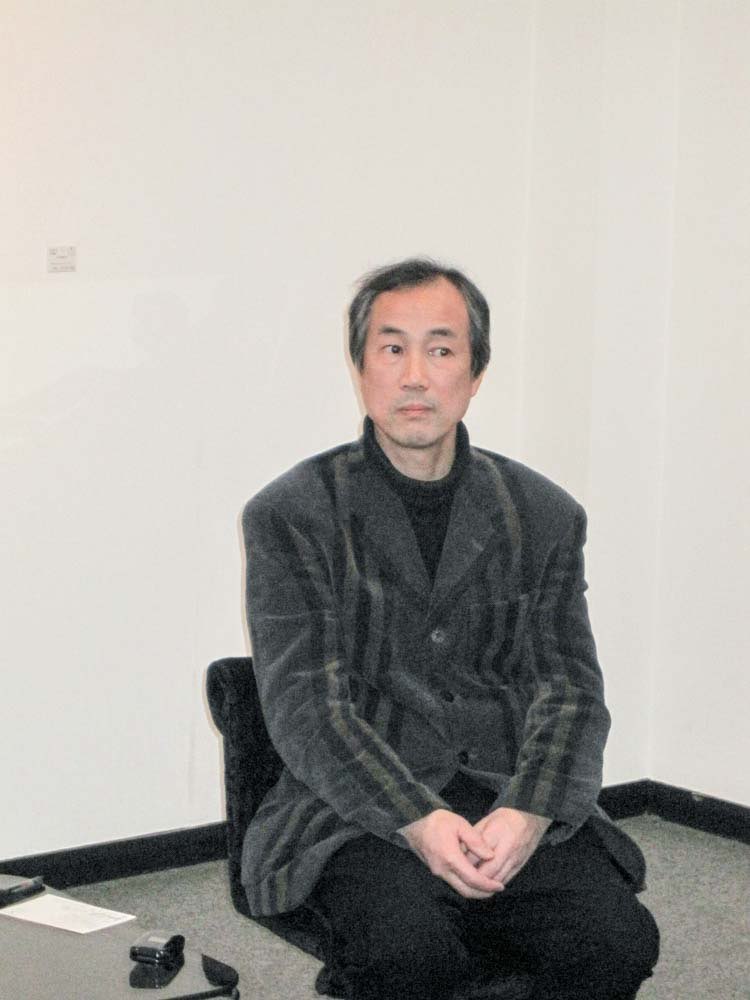
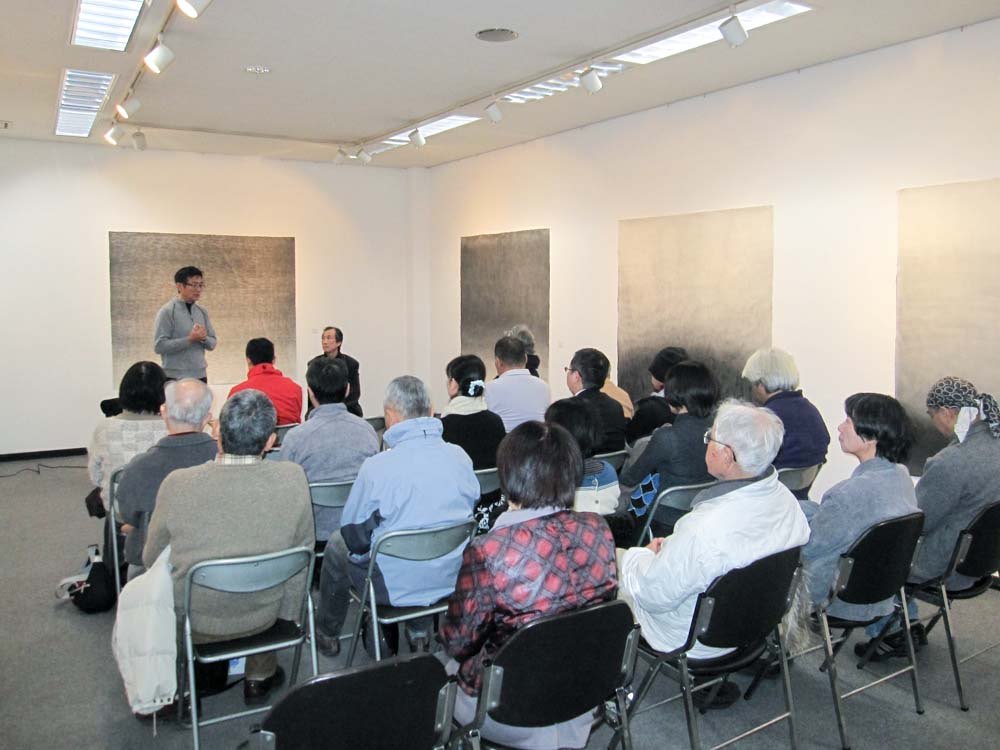
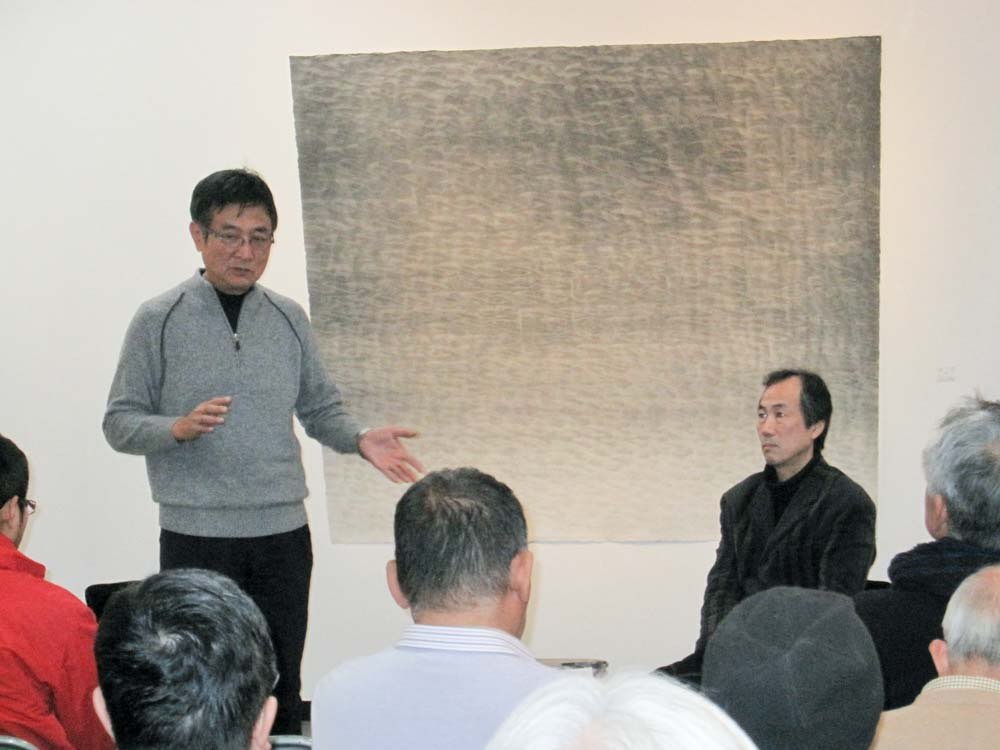
Thank you very much for your attendance. We have received abstracts of the lectures by Mr. Matsunaga and Mr. Hara, which are shown below along with photos from the day.
< Summary of Mr. Matsunaga's lecture >
The Center and the Regions in Contemporary Art
From the Meiji Restoration to the present, Japanese society has developed from the establishment of a centralized system to the reorganization of a decentralized system. The same development can be seen in the field of art.
After the Meiji era, a new system of "fine arts" was introduced from the West to promote modernization in Japan. The art world that administered this system was led by artists' organizations centering on the government-run exhibitions.
In the postwar period, art was used to promote democratization, and the artists' associations became more and more divided and multi-headed. These were all centered in urban areas.
On the other hand, after the defeat in the war, group exhibition-affiliated artists began to engage in activities to root art in the community through prefectural and city exhibitions. This was an attempt to decentralize art.
In the 1960s, avant-garde art movements emerged in various regions, and countless artist groups were formed without the assumption of continuity. These movements were led by art critics, and the name "contemporary art" spread through magazines and other media.
Around 1970, the "mono-ha" school emerged and began to use materials to express themselves in confrontation with themselves. They did not like to work in groups, and their works were presented mainly in solo exhibitions at art galleries in urban areas. This made contemporary art an individual activity.
In the 1980s, gallery-based artists often traveled abroad to present their work. As a result, they exhibited mainly in urban areas and abroad, and rarely had the opportunity to exhibit in their own neighborhoods. On the other hand, young artists who participated in group exhibitions found it difficult to gain recognition in the art world, and the aging of the local art scene continued.
In the 1990s, the trend of artists who had been mainly engaged in solo exhibitions began to diversify, and the boundaries between these exhibitions themselves became blurred. In the 2000s, three trends emerged: art market, welfare art, and self-confrontation.
Around 1990, an international art market was formed in the U.S. and other countries. After Takashi Murakami's success there, Japanese art dealers also began to participate in the art fairs held there. Artists who became involved in the art market are referred to as "art market artists".
Today, the population of rural areas in Japan is aging. A policy is underway to dispatch young people who aspire to become artists to such areas, where they can enhance their motivation for living together through creative activities. The people who participate in these activities are called "welfare art people.
In addition, artists who confront themselves in the Mono-ha school are also seeking new venues for development. Hara Hiroshi and others are included in this group, and it seems appropriate to link the activities of these artists to education. Today, there is a need to shift from an education of learning to an education of thinking, and art that confronts the self is thought to be a powerful tool for this change.
< Abstract of Lecture by Hiroshi >
First of all, I would like to briefly introduce myself by telling you about my history, including my encounter with Mr. Matsunaga.
I went to an art college and studied oil painting because I loved painting. In the late 1970s, while I was a student at art school, I was often told the following story: "People who want to be artists in the future will have to learn how to paint. It is important for those who aspire to become artists to look deeply into themselves and create works that emerge from internal necessity, rather than relying on existing group exhibitions to create their works. For this reason, they should rent galleries where they can exhibit their works freely. In the 1980s, many young artists held solo exhibitions at rental galleries in Ginza, Kanda, and other areas, where their experimental works were exhibited. Many people involved in the art world, including artists, critics, and art museum personnel, gathered there to engage in serious discussions, and the atmosphere was filled with enthusiasm.
After graduating from art college, I returned to my hometown of Kagawa and, with the understanding of the building's management, planned and operated a gallery in a vacant building space with my friends in order to create a place to freely present and study our own works in our hometown of Kagawa. After many twists and turns, my local art activities have now entered a new phase with the establishment of the "NPO Kagawa Monozukuri Gakko" with my friends to develop art and cultural activities in the region. On the other hand, I had held only three exhibitions in Tokyo when I was in my twenties, leaving me with an undigested feeling. I met Mr. Matsunaga, who was a curator at the Museum of Modern Art, Saitama at the time, at the venue of my solo exhibition.
At the age of 50, I decided to rent a gallery in Tokyo again and hold a solo exhibition to confirm these undigested feelings. At that time, I consulted with Mr. Matsunaga about the choice of venue, as we were old acquaintances. He gave me several suggestions, and I signed a contract with one of them, Gallery Natsuka, to hold three solo exhibitions and one group exhibition organized by the gallery. I felt that the gallery had changed considerably, with fewer people from the art world visiting the gallery and less enthusiasm than I had felt in the past. At the same time, I held a solo exhibition in Vancouver, Canada, in 2008 at the recommendation of a friend. Again, I visited several potential galleries. Unlike in Japan, all of the galleries had their works screened by the director and operated in the form of a special exhibition. My evaluation of the exhibition was that "the artist himself started from the creation of materials, and I felt the originality of his expression based on his identity as a Japanese. Therefore, I held the exhibition at artbeatus, which is run by a foundation in Hong Kong that had Japanese staff.
The following is an excerpt from a review by a Vancouver-based art critic who saw the exhibition as a brief evaluation of the solo show. The reviewer wrote, "Although media such as print and the Internet are now the major means of communicating art, the true value of Hara's work can be appreciated by seeing it in person. Hara's work is proof that such fields of expression are still clearly important today. At the same time, as a member of artbeatus in 2008, Hara has exhibited three times at "Art Fair Tokyo" held at the Tokyo International Forum. However, the international economic recession brought about by the Lehman Shock in 2009 may have made the situation more serious than expected, and the number of exhibiting artists at each gallery has changed drastically. In 2011, artbeatus also withdrew from the exhibition. I saw a glimpse of vulnerability that was greatly affected by the economic situation rather than artistic issues.
My choice of washi as a material is largely due to my encounter with the material, my memories, and my subconscious, rather than my being Japanese. I believe that the classes I took at university with Lee Ufan, the pioneer of the "Mono-ha" school of conceptual art, had a great influence on my thinking about how to express the beauty of washi so that people can enjoy it and how to make the most of it. The class was not about "painting something," but about "confronting the material itself to deepen one's self-confrontation. I still remember it vividly.
New values are spreading through mass media and the Internet. This is the mainstream today. However, for me, expression that strikes people's hearts directly, even if it does not make full use of such strategies, is a major indicator of my work. I understand that internationalization is a major mission of Japanese society, but I believe that it is through a deep confrontation with one's own work that one can become aware of one's own position and identity in the international community, and I believe that it is my role to pursue expression in this way.
Artist Name: HARA Hiroshi Real name: TANIKAWA Hiroshi
Born in Takamatsu City, 1956. Graduated from Tama Art University, Department of Painting, 1979 Born in Kagawa, Japan in 1956, Hara majored in oil painting at Tama Art University. After experimenting with various materials such as glass and bark, since 2003, he has been using handmade Japanese paper and ink (Suiboku-ga technique) to create minimalistic works on the theme of "phenomenon and action". Currently, he is not concerned with the material of expression in his work. He believes that self-expression is born from an internal necessity and that it is important to compare the self (our culture) with others (other cultures).
He has participated in numerous exhibitions including Art Fair Tokyo (2008-2010), Art HK (Hong Kong, 2010), Art Taipei 2012 (Taipei, 2012), Unbound Perspectives Exhibition (New York, 2012), Kagawa Yamanami Art Festival (Kagawa Prefecture, 2013-2019). He has participated in many exhibitions such as Art Taipei 2012 (Taipei, Taiwan, 2010), Unbound Perspectives Exhibition (New York, 2012), Kagawa Yamanami Art Festival (Kagawa, 2013-2019).
Solo Exhibitions
2024 “Hiroshi Hara Exhibition: With the Kaiganji Temple Barrier Paintings,” Nakatsu Banshoen Marugame Museum, Marugame, Kagawa , 2023 “Hiroshi Hara × Hiroko Tanikawa Exhibition,” Artland Gallery, Marugame, Kagawa, 2022 “Hiroshi Hara 1975–2022,” Art Echo Gallery, Manno, Kagawa
2019 Kamado Hall (Sakaide, Japan), 2016 Art Beatus HK (Hong Kong), 2012, 14-17, 19,21 Artland Gallery (Marugame, Japan), 2007, 08, 10, 15, 18 Gallery Natsuka (Ginza, Kyobashi, Tokyo), 2008 Art Beatus Van ( (Bankvar, Tokyo), 2008 Art Beatus Van (Bankvar, Tokyo)