Shinya Sakurai
June 5 - July 4, 2021
Wednesday-Sunday: 11: 00-17: 00
Last day of the exhibition: 11: 00-16: 00
Closed : Monday, Tuesday
■ Opening reception This time, the opening reception is not scheduled due to the current circumstances of covid-19.
■ Artist The artist is planning to be in the gallery on June 5th (Sat) and 6th (Sun), so please feel free to come.
For inquiries about the works, please contact us via e-mail: sales@artland-gallery.jp.
Shinya Sakurai
1981 Born in Fukuyama, Hiroshima, Japan
2004 Graduated from Art Planning Department, Osaka University of Arts, Japan
2004 Entered Accademia Albertina delle Belle Arti di Torino, Italy
Lives and works in Turin
Selected Solo Exhibitions
2003 "SHINYA SAKURAI SOLO EXHIBITON" The Museum Of Arts & Crafts, Itami / Itami, Japa
2004 "SHINYA SAKURAI SOLO EXHIBITON" SHIBUYA MuseumOf ART / Fukuyama, Japan
2005 "NEW TYPE" Consolato dell'Giappone / Milan, Italy
2006 "LIFE IS BEAUTIFUL" Gallery CATARTICA / Turin, Italy
2007 "LOVE from HIROSHIMA" Galleria Arte Giovane / Asti, Italy
2008 "LOVE COMUNICATION" Accademia Delle Belle Arti Macerata / Macerata, Italy
2008 "POSITIVE HAPPY LOVE" Galerie Paris/ Yokohama, Japan
2009 "INTELLIGENCE SURFACE" CRAC / Cremona, Italy
2010 "ONE" Artmark Gallery / Viena, Austria
2010 "Cuore" Giorgio Marosi Gallery / Turin, Italy
2010 "LOVE SONG" Galerie Paris / Yokohama, Japan
2011 "FLY The FLAG" The White Gallery / Milan, Italy
2012 "Shinya Sakurai2007-2012" Palazzo Mistrot / Turin, Italy
2012 "LOVE POOL" Galleria Albanese Arte / Matera, Italy
2012 "LOVE POOL" Galerie Paris / Yokohama, Japan
2013 "UNITED COLORS" Base Gallery / Tokyo, Japan
2013 "LOVE POOL" Maeda Hiromi Art Gallery / Kyoto, Japan
2013 "LOVE POOL" YAMAKI Fine Art Gallery / Kobe, Japan
2014 "Atomic Heart" Maria Cilena Gallery / Milano, Italy
2014 "My Favorite Colors" Galerie Paris / Yokohama, Japan
2014 "My Favorite Colors" HEIS Gallery / Fukuoka, Japan
2015 "UNITED COLORS" Maeda Hiromi Art Gallery / Kyoto, Japan
2015 "e intanto fioriscono i ciliegi" Eidos Immagini Contemporanee / Asti, Italy
2015 "My Favorite Colors" HEIS Gallery / Fukuoka, Japan
2015 "United Colors" ART LAND Gallery / Marugame, Japan
2016 "United Colors" Galerie Paris / Yokohama, Japan
2016 "COLORS" CONTEMPORARY HEIS ART / Tokyo, Japan
2017 "Unite Colors" Galerie Lattemann / Darmstadt, Germany
2017 "WAKE UP THE COLOR" Maeda Hiromi Art Gallery / Kyoto, Japan
2017 "Azzuri" ART LAND Gallery / Marugame, Japan
2017 "My Favorite Colors" Fondazione San Domenico / Crema, Italy
2018 "My Favorite Colors" CARUSO GALLERY/ Messina, Italy
2018 "Colors" Galerie Paris / Yokohama, Japan
2018 "Delicious Colors" CONTEMPORARY HEIS ART / Tokyo, Japan
2019 "Delicious Colors” Galleria Il Castello / Milano,Italy
2019 "Delicious Colors" Maeda Hiromi Art Gallery / Kyoto, Japan
2019 "Delicious Colors" ART LAND Gallery / Marugame, Japan
2019 "Delicious Colors" Kaki Gallery / Toyama, Japan
2020 "Delicious Colors" Galerie Paris / Yokohama, Japan
2020 "Symbol" CONTEMPORARY HEIS ART / Tokyo, Japan
Awards
2003 President of Japan Mint Award in Osaka Arts and Crafts Exhibition
2003, ATC Design Museum, Osaka
2004 President of NHK Broadcasting Centre Award in Osaka Arts and Crafts Exhibition 2004, ATC Design Museum, Osaka
2005 Merit Award in International Young Men Fine Arts Conpetition, Carosso City Exhibition Hall, Carosso, Italy
2006 Finalista, Matteo Olibero Conpetition, / Matteo Olivero Competition, / Amulet Beltoni Foundation, Salzzo
2006 Premio, /Borgo Piazza Painting Competition, Oratory of Gonfalone, Fossano
2008 Finalista in Roma International Youth Art Competition, Roma Federal Office for Culture, Roma
Collection
Roberto Bilotti Museum of Contemporary Art, Rende, Italy
Artists Society in Turin, Turin, Italy
The City Hall of Castorano, Italy
Rest Villa Hiroshima Hikarigaoka, Hiroshima
ACCADEMIA DI BELLE ARTI di MACERATA, Macerata, Italy
Cremona Contemporary Art Centre, Cremona, Italy


Shinya Sakurai: Delicious Colors / Symbol
Shinya Sakurai is an artist who works between Japan and Turin, Italy.
Drawing on his experience of studying dyeing techniques in Japan and pursuing extensive research into color in Italy, he has created a variety of painting series exploring different themes.
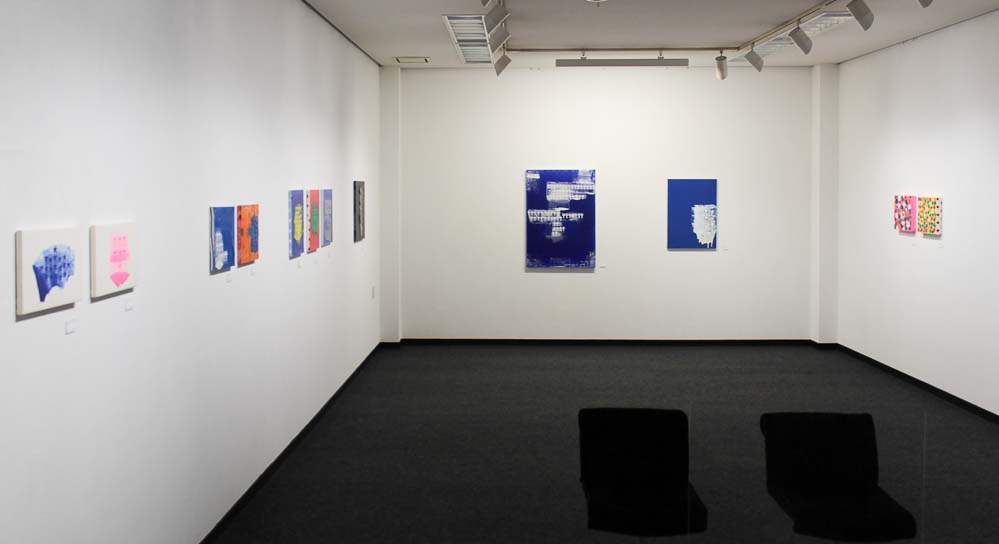
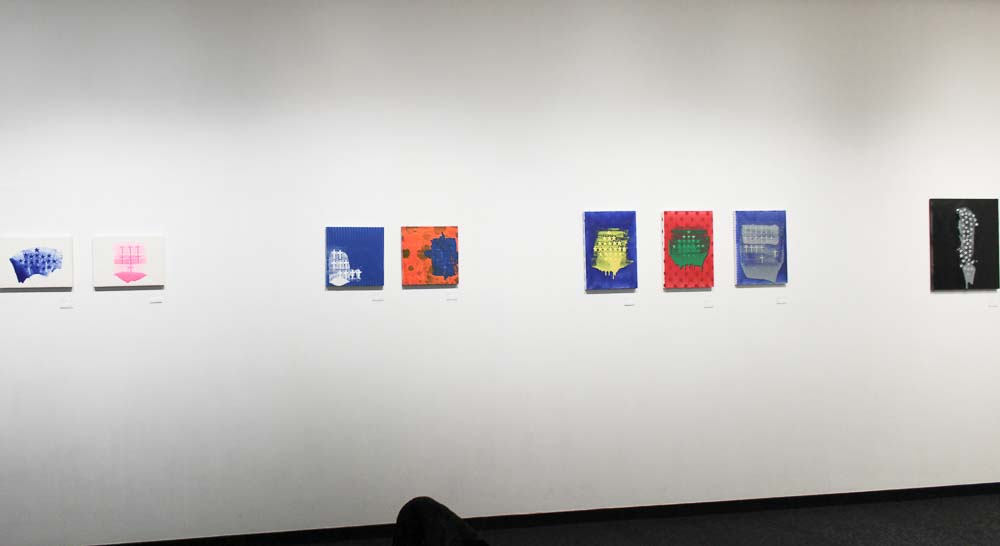
In recent years, a consistent feature of his work has been the construction of multilayered surfaces, in which translucent paints are applied over patterned fabric used as a support. Sakurai explains that this approach originated while he was working abroad, when he became conscious of the discrepancy between the image of “Hiroshima” held by people overseas and the Hiroshima in which he was born and raised. The Delicious Colors and Symbol series presented in this exhibition also embody these characteristic qualities of Sakurai’s work.
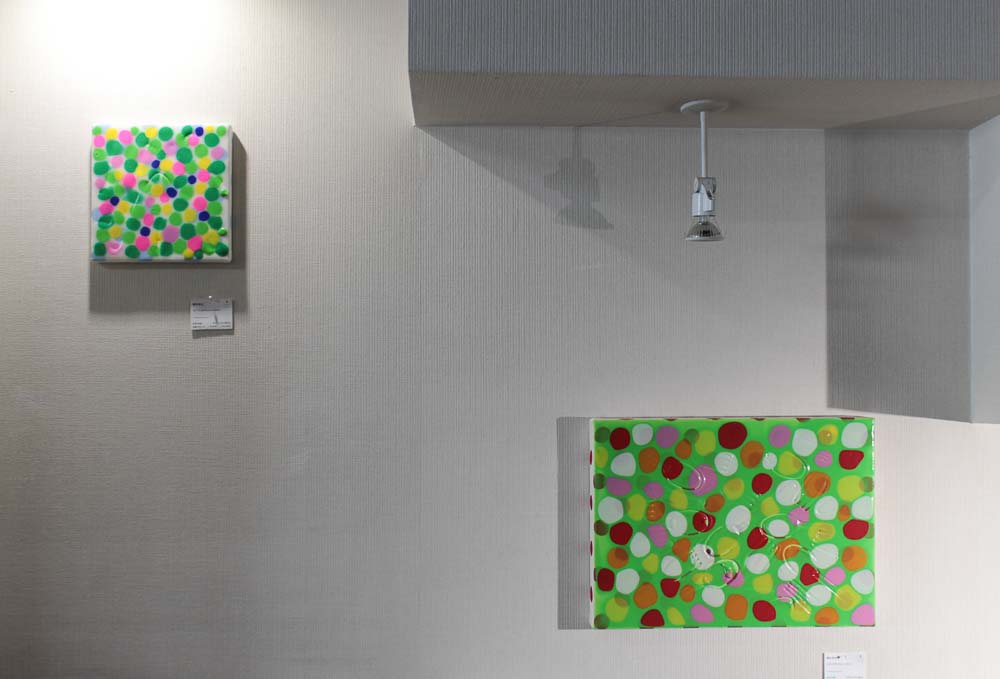
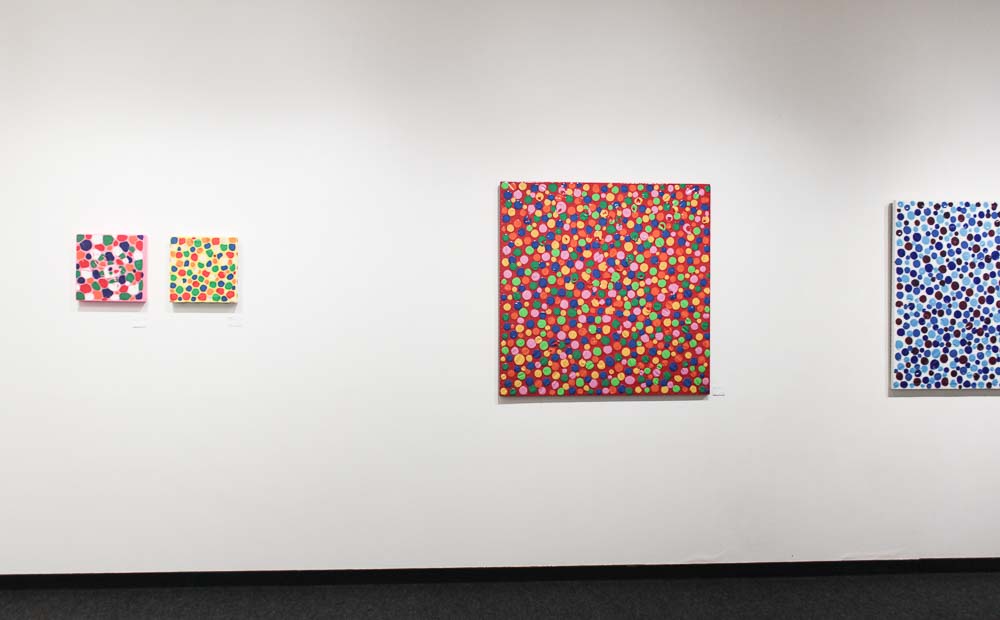
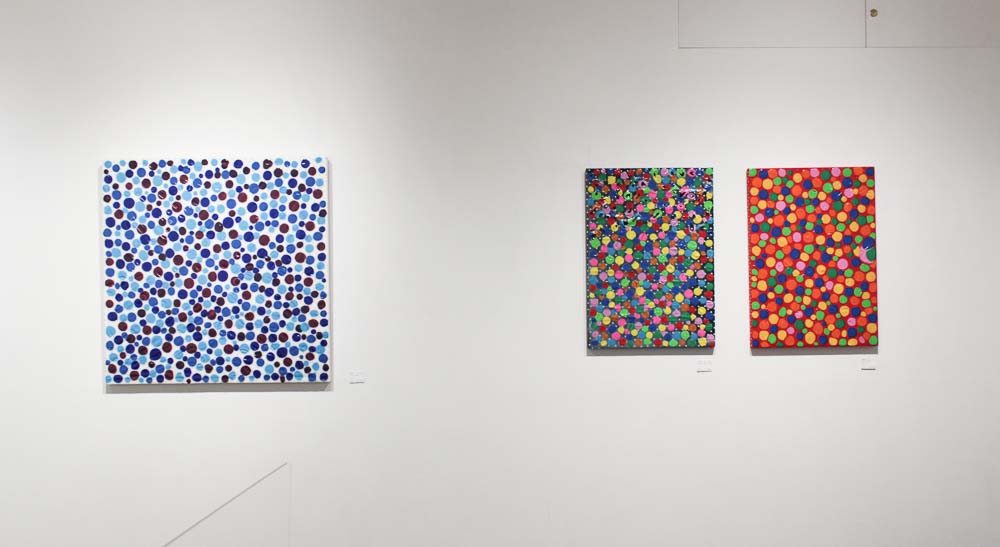
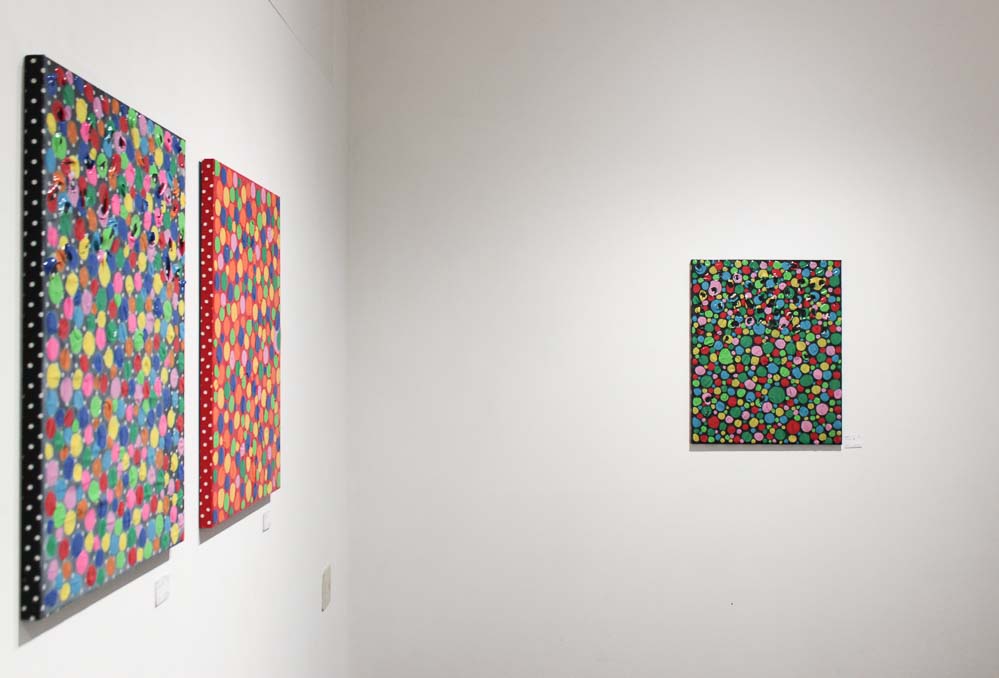
The Delicious Colors series features colorful polka dots that are playful and charming, while the glossy, translucent paint catches the viewer’s eye. The surface is so smooth that one is tempted to reach out and touch it. This distinctive texture is achieved by mixing resin into the paint. Looking closely, viewers will notice the dotted fabric beneath the paint peeking through the gaps. The sides of the works are designed to reveal the pattern of the supporting fabric more clearly, inviting viewers to enjoy the works from every angle. Most striking of all are the traces of spoons and forks. These imprints penetrate so deeply into the works that they break through the surface paint. Sakurai’s paintings have long incorporated visual elements that evoke sweets: multiple layers reminiscent of cakes, a glossy finish like jelly, and small, rounded, colorful motifs. By physically disrupting the painted surface with cutlery, he has added a tactile dimension, as if one were actually scooping up a dessert. Viewers can now truly savor the “Delicious Colors.”
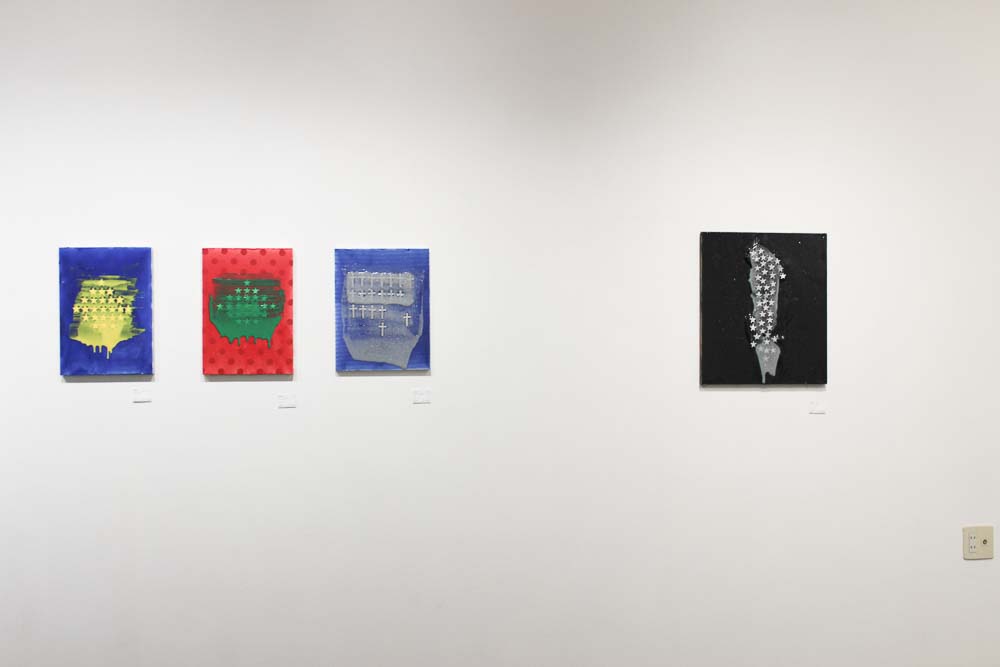
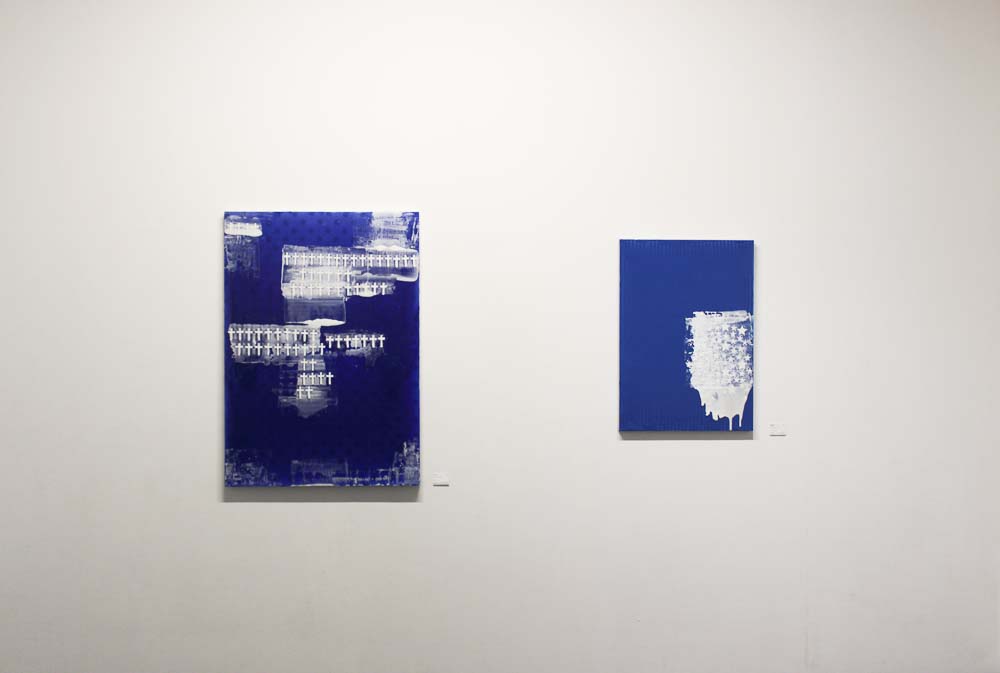
The new Symbol series, by contrast, builds on his previous works while presenting a more challenging body of work with a distinctly different character. For the first time, stripes and bands appear in the patterns of the supporting fabric, while star motifs have also been introduced among the icons. The icons, made visible as if emerging from the surface when paint is poured over the embossed forms, possess a certain sense of mystery. It is also a refreshing surprise to encounter predominantly white paintings within Sakurai’s oeuvre, which is generally associated with colorful imagery. I hope you will experience firsthand how these new expressions appeal to our senses by standing before the works themselves.
Sakiko Yoshikawa (Curator, Fukuyama Museum of Art)
